
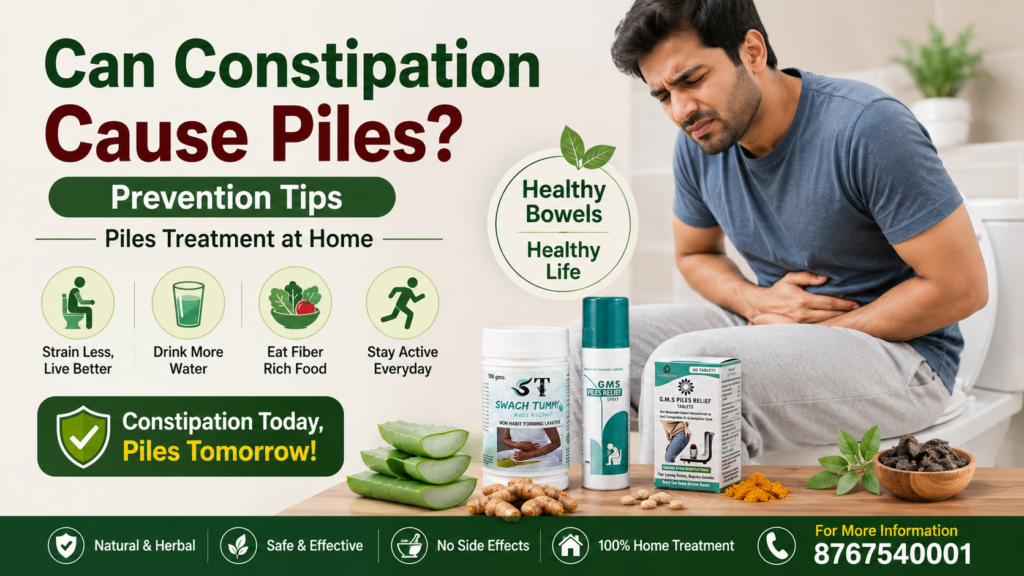
Constipation is one of the most common factors linked to the development of piles (hemorrhoids). When bowel movements become difficult, people often strain to pass stool, placing extra pressure on the veins in the rectum and anus. Over time, this increased pressure can lead to swollen veins, resulting in piles.
The good news is that constipation is often preventable. By improving your diet, staying hydrated, and adopting healthy bowel habits, you can reduce your risk of hemorrhoids and support piles treatment at home.
What Are Piles?
Piles, also called hemorrhoids, are swollen or enlarged veins in the lower rectum or around the anus. They can occur internally (inside the rectum) or externally (under the skin around the anus).
Common symptoms include:
- Pain during bowel movements
- Bright red bleeding after passing stool
- Itching around the anus
- Swelling or a lump near the anus
- Burning sensation
- Mucus discharge
- Discomfort while sitting
Many mild cases improve with conservative care, including diet and lifestyle changes.
What Is Constipation?
Constipation generally means:
- Fewer than three bowel movements per week
- Hard or dry stools
- Difficulty passing stool
- Straining during bowel movements
- Feeling that the bowel has not emptied completely
Occasional constipation is common, but chronic constipation increases the likelihood of developing piles.
How Does Constipation Cause Piles?
When stool becomes hard and difficult to pass, people naturally push harder during bowel movements. This repeated straining increases pressure inside the rectal veins.
Over time, the veins stretch and swell, eventually forming hemorrhoids.
Constipation can contribute to piles by:
- Increasing pressure on rectal veins
- Causing prolonged sitting on the toilet
- Leading to repeated straining
- Irritating existing hemorrhoids
- Delaying healing of inflamed tissues
This is why preventing constipation is a key part of piles treatment at home.
Other Risk Factors for Piles
Although constipation is a major cause, other factors also increase the risk.
These include:
- Low-fiber diet
- Pregnancy
- Obesity
- Chronic diarrhea
- Heavy lifting
- Long hours of sitting
- Aging
- Family history
- Lack of physical activity
Signs That Constipation May Be Worsening Your Piles
You may notice:
- Pain while passing hard stool
- Bleeding after bowel movements
- Increased swelling
- Worsening itching
- More discomfort after prolonged straining
If symptoms continue despite home care, seek medical advice.
Prevention Tips to Reduce Constipation and Piles
1. Eat More Fiber
Fiber helps soften stool and promotes regular bowel movements.
High-fiber foods include:
- Oats
- Brown rice
- Whole wheat bread
- Lentils
- Chickpeas
- Apples
- Pears
- Papaya
- Guava
- Spinach
- Broccoli
Adults should aim for 25–35 grams of fiber daily.
2. Drink Plenty of Water
Fiber works best when combined with adequate hydration.
Drink around 2–3 liters of water daily unless your healthcare provider advises otherwise.
Water helps keep stools soft and easier to pass.
3. Walk Every Day
Regular exercise stimulates the digestive system.
A simple 30-minute walk each day may reduce constipation and improve bowel regularity.
4. Respond to the Urge to Pass Stool
Ignoring the urge allows stool to remain in the colon longer, where it becomes harder and drier.
Go to the toilet as soon as you feel the need.
5. Avoid Straining
Straining is one of the biggest contributors to hemorrhoids.
Instead:
- Relax during bowel movements
- Take your time
- Avoid holding your breath
- Leave the toilet if nothing happens within a few minutes
6. Limit Toilet Time
Avoid sitting on the toilet for more than 5–10 minutes.
Reading or using your phone while sitting can increase pressure on the rectal veins.
7. Stay Active Throughout the Day
If you work at a desk:
- Stand every hour
- Stretch regularly
- Take short walks
Reducing prolonged sitting helps improve circulation and digestive function.
8. Maintain a Healthy Weight
Excess body weight places additional pressure on the pelvic veins, increasing the risk of hemorrhoids.
A balanced diet and regular activity can support healthy weight management.
Foods That Help Prevent Constipation
Choose foods that support digestive health.
Fruits
- Papaya
- Pears
- Apples
- Oranges
- Kiwi
Vegetables
- Spinach
- Carrots
- Pumpkin
- Broccoli
- Cucumber
Whole Grains
- Oats
- Brown rice
- Whole wheat
- Millet
- Barley
Protein Sources
- Lentils
- Beans
- Chickpeas
- Yogurt
Foods to Limit
Some foods may contribute to constipation in certain individuals.
Try reducing:
- Fried foods
- Fast food
- Processed snacks
- White bread
- Refined flour products
- Sugary beverages
- Excess alcohol
If spicy foods worsen your symptoms, consider limiting them during flare-ups.
Home Care for Piles Caused by Constipation
If constipation has already contributed to hemorrhoids, these self-care measures may help:
Warm Sitz Baths
Soak the anal area in warm water for 15–20 minutes several times a day to ease discomfort.
Gentle Cleaning
After bowel movements:
- Wash with lukewarm water if possible.
- Avoid harsh soaps.
- Pat the area dry gently.
Cold Compresses
Applying an ice pack wrapped in a cloth for 10–15 minutes may help reduce swelling.
Can Herbal Products Help?
Some herbal products are marketed for digestive support or hemorrhoid relief. While some people find them helpful, evidence varies, and they should not replace a balanced diet, adequate hydration, or medical advice.
Choose products from reputable manufacturers and follow the recommended directions.
When Should You See a Doctor?
Home care is appropriate for many mild cases, but seek medical attention if you experience:
- Heavy or persistent rectal bleeding
- Severe pain
- Fever or signs of infection
- A prolapsed hemorrhoid that cannot be pushed back
- Symptoms lasting more than one week despite home care
- Unexplained weight loss or changes in bowel habits
Persistent rectal bleeding should always be evaluated to rule out other conditions.
Frequently Asked Questions
Can constipation directly cause piles?
Constipation itself does not create hemorrhoids, but the repeated straining and pressure associated with hard stools are major contributors to their development.
Will treating constipation help piles?
Yes. Preventing constipation reduces strain during bowel movements, allowing irritated hemorrhoids to heal more effectively.
How much water should I drink?
Most healthy adults benefit from around 2–3 liters of fluids daily, though individual needs vary based on activity level, climate, and medical conditions.
Is fiber the best way to prevent piles?
A fiber-rich diet is one of the most effective ways to reduce constipation and lower the risk of hemorrhoid flare-ups when combined with proper hydration and regular physical activity.
Final Thoughts
Constipation is one of the leading factors behind hemorrhoids because it increases straining and pressure on the rectal veins. Fortunately, simple lifestyle changes can make a significant difference. Eating more fiber, drinking enough water, staying physically active, and following healthy toilet habits are essential components of piles treatment at home and can help prevent future flare-ups.
If bleeding, severe pain, or persistent symptoms continue despite these measures, consult a healthcare professional for a proper diagnosis and treatment plan.