
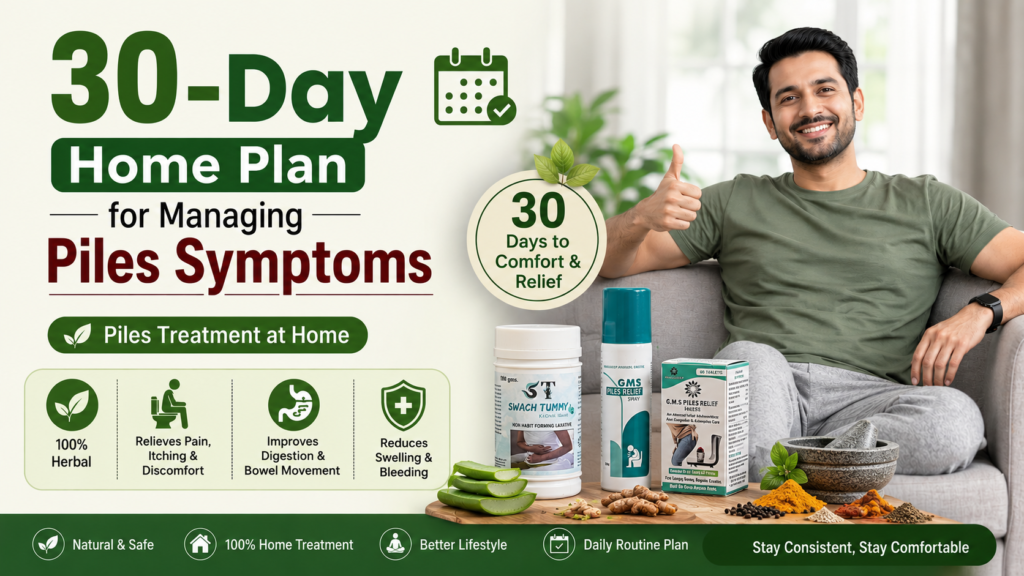
Piles (hemorrhoids) can cause discomfort, itching, pain, swelling, and occasional bleeding during bowel movements. While severe cases may require medical treatment, many mild to moderate cases can improve with consistent self-care. The key is not finding a quick fix but building healthy daily habits that support healing and prevent symptoms from returning.
This 30-day piles treatment at home plan combines dietary changes, hydration, exercise, healthy bowel habits, and home care techniques that are commonly recommended to help manage hemorrhoid symptoms naturally.
Note: This guide is intended for mild to moderate hemorrhoid symptoms. If you experience heavy bleeding, severe pain, fever, or symptoms that do not improve, consult a qualified healthcare professional.
Why a 30-Day Plan Works
Many people start healthy habits for a few days and stop when symptoms improve. However, hemorrhoids often return if constipation, prolonged sitting, or poor dietary habits continue.
Following a structured piles treatment at home plan for one month allows your digestive system to adjust while helping reduce strain on the anal veins.
Week 1: Reduce Pain and Improve Digestion
The first week focuses on relieving discomfort and preventing constipation.
Day 1–7 Goals
Drink More Water
Aim for 2–3 liters of water throughout the day unless your doctor has advised otherwise.
Hydration helps soften stools and reduces straining.
Eat More Fiber
Include fiber-rich foods in every meal.
Examples include:
- Oats
- Brown rice
- Whole wheat bread
- Apples
- Pears
- Papaya
- Guava
- Spinach
- Lentils
- Chickpeas
Increase fiber gradually to avoid bloating.
Take Warm Sitz Baths
Sit in warm water for 15–20 minutes, two or three times daily, especially after bowel movements.
This may help:
- Reduce discomfort
- Relax muscles
- Ease itching
- Improve comfort
Avoid Straining
Never force a bowel movement.
If nothing happens within a few minutes, get up and try again later.
Walk for 20–30 Minutes
A daily walk stimulates digestion and helps prevent constipation.
Week 2: Build Healthy Habits
By now, bowel movements may become easier.
Continue the Week 1 habits and add the following.
Eat Five Servings of Fruits and Vegetables
Aim for a colorful variety every day.
Good choices include:
- Broccoli
- Carrots
- Pumpkin
- Cucumber
- Oranges
- Kiwi
- Berries
- Leafy greens
Replace Refined Foods
Swap:
- White rice → Brown rice
- White bread → Whole-grain bread
- Sugary snacks → Fresh fruit
- Fried snacks → Roasted nuts (in moderation)
Improve Toilet Habits
Remember these simple rules:
- Go when you feel the urge.
- Do not delay bowel movements.
- Limit toilet time to 5–10 minutes.
- Avoid using your phone while on the toilet.
Stay Active During the Day
If you work at a desk:
- Stand every hour.
- Stretch for 2–3 minutes.
- Walk around briefly.
Reducing prolonged sitting helps lower pressure on the rectal veins.
Week 3: Focus on Prevention
At this stage, symptoms may begin to improve if you’ve been consistent.
Add Gentle Exercise
Choose activities such as:
- Walking
- Swimming
- Yoga
- Stretching
- Light cycling (if comfortable)
Avoid heavy lifting during painful flare-ups.
Practice Gentle Hygiene
After bowel movements:
- Clean the area with lukewarm water if possible.
- Avoid scented soaps.
- Pat dry gently.
- Wear breathable cotton underwear.
These steps help reduce irritation.
Manage Stress
Stress can affect digestion and contribute to constipation in some individuals.
Try:
- Deep breathing
- Meditation
- Reading
- Light stretching
- Spending time outdoors
Week 4: Maintain Long-Term Results
The final week focuses on creating habits you can continue beyond the 30-day plan.
Continue Eating High-Fiber Meals
Build meals around:
- Vegetables
- Fruits
- Whole grains
- Beans
- Lentils
- Seeds
- Nuts (in moderation)
Maintain Healthy Weight
If overweight, gradual weight management through balanced eating and regular activity can reduce pressure on the pelvic veins.
Stay Hydrated Every Day
Do not wait until you feel thirsty.
Carry a reusable water bottle to help maintain your fluid intake.
Avoid Long Periods of Sitting
Whether at work or home:
- Stand regularly.
- Stretch.
- Walk for a few minutes every hour.
Sample Daily Routine
Morning
- Drink 1–2 glasses of water.
- Eat a high-fiber breakfast such as oatmeal with fruit.
- Walk for 20–30 minutes.
Afternoon
- Eat a balanced lunch with vegetables and whole grains.
- Drink water regularly.
- Stand and stretch every hour if sitting.
Evening
- Enjoy a light dinner rich in vegetables.
- Take a short walk after eating.
- If needed, take a warm sitz bath before bed.
Foods That Support Piles Treatment at Home
Include these regularly:
Fruits
- Papaya
- Apples
- Pears
- Oranges
- Kiwi
Vegetables
- Spinach
- Broccoli
- Pumpkin
- Carrots
- Cucumber
Whole Grains
- Oats
- Brown rice
- Whole wheat
- Millet
- Barley
Protein Sources
- Lentils
- Beans
- Chickpeas
- Yogurt
Foods to Limit
Some foods may worsen constipation or digestive discomfort in certain people.
Try reducing:
- Fried foods
- Processed snacks
- Refined flour products
- Sugary drinks
- Excess alcohol
- Very spicy foods if they trigger symptoms
Common Mistakes to Avoid
- Ignoring constipation
- Drinking too little water
- Sitting for long periods
- Straining during bowel movements
- Delaying the urge to pass stool
- Eating too little fiber
- Relying only on home remedies without addressing lifestyle habits
When Home Treatment Isn’t Enough
Consult a healthcare professional if you experience:
- Heavy or persistent rectal bleeding
- Severe pain
- A prolapsed hemorrhoid that cannot be pushed back
- Fever or signs of infection
- Symptoms lasting longer than one week despite home care
- Frequent recurrence of hemorrhoids
Early evaluation helps rule out other conditions and ensures appropriate treatment.
Frequently Asked Questions
How long does piles treatment at home take?
Many people notice improvement within a few days to two weeks. Maintaining healthy habits over 30 days can support long-term symptom control and reduce recurrence.
Is walking good for piles?
Yes. Walking encourages regular bowel movements, improves circulation, and helps reduce constipation.
Can piles heal naturally?
Many mild hemorrhoids improve with conservative measures such as dietary changes, hydration, and healthy bowel habits.
Is fiber important?
Yes. Fiber softens stools, reduces straining, and is one of the most effective ways to prevent hemorrhoid flare-ups.
Final Thoughts
A consistent piles treatment at home plan can make a meaningful difference for many people with mild to moderate hemorrhoids. By following healthy eating habits, drinking enough water, staying active, practicing good toilet habits, and using warm sitz baths when needed, you can support healing and lower the risk of future flare-ups.
Remember that home care is not a substitute for medical evaluation. If symptoms are severe, persistent, or accompanied by significant bleeding, seek advice from a qualified healthcare professional. Any questions related to piles treatment – 8767540001