
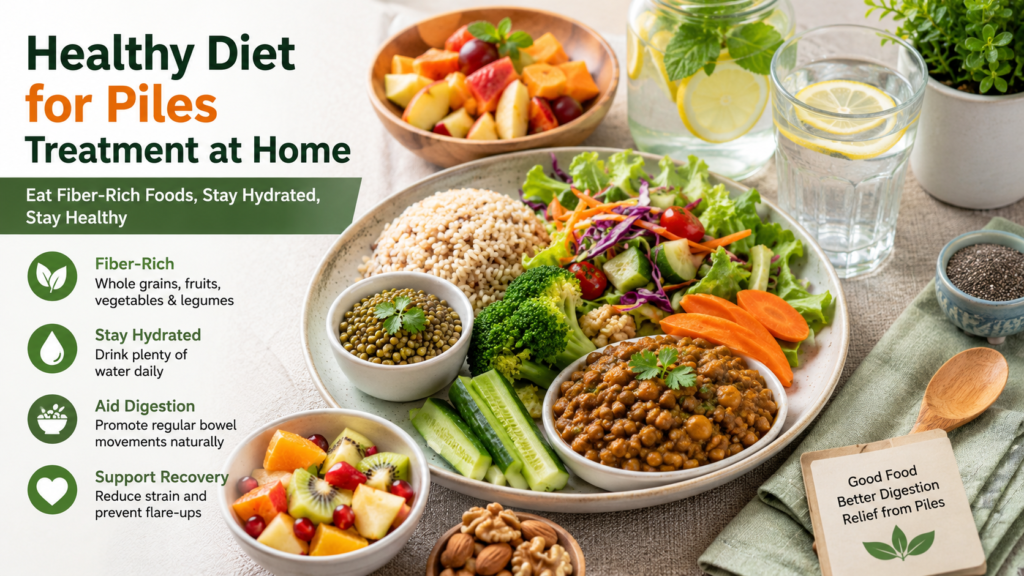
Piles, commonly known as hemorrhoids, affect millions of people worldwide. One of the biggest reasons behind piles is chronic constipation and repeated straining during bowel movements. While medicines and medical treatment play an important role, your daily diet has an equally significant impact on symptom relief and long-term recovery.
Many people search for the best piles treatment at home, but often overlook the importance of healthy eating habits. A proper diet can soften stools, improve digestion, reduce pressure on hemorrhoidal veins, and minimize the chances of recurring flare-ups.
This comprehensive guide explains everything you need to know about the ideal diet for piles patients, including foods that promote healthy digestion, foods to avoid, hydration strategies, meal planning, and lifestyle tips.
Why Diet Matters in Piles
Piles develop when excessive pressure is placed on the veins around the rectum and anus. This pressure often occurs due to:
- Chronic constipation
- Hard stools
- Frequent straining
- Sitting on the toilet for too long
- Low-fiber diet
- Dehydration
- Obesity
- Pregnancy
A balanced diet helps by:
- Softening stools naturally
- Improving bowel movement frequency
- Preventing constipation
- Reducing inflammation
- Supporting gut health
- Lowering pressure during bowel movements
People who consistently consume enough fiber and water are generally less likely to suffer from severe piles symptoms.
Understanding Dietary Fiber
Fiber is the most important nutrient for piles patients.
It adds bulk to stool while helping retain water, making bowel movements easier and less painful.
There are two major types of fiber.
Soluble Fiber
Soluble fiber absorbs water and forms a soft gel inside the digestive tract.
Benefits include:
- Softer stools
- Better digestion
- Reduced constipation
- Healthier gut bacteria
Sources include:
- Oats
- Apples
- Pears
- Citrus fruits
- Barley
- Flaxseeds
- Chia seeds
Insoluble Fiber
Insoluble fiber increases stool bulk and speeds up waste movement through the intestines.
Good sources include:
- Whole wheat
- Brown rice
- Carrots
- Broccoli
- Cabbage
- Spinach
- Green beans
A combination of both types provides the best digestive support.
Top Foods for Piles Patients
1. Whole Grains
Whole grains contain high amounts of dietary fiber.
Excellent choices include:
- Oats
- Brown rice
- Whole wheat flour
- Quinoa
- Barley
- Millets
Replace refined flour products with whole-grain alternatives whenever possible.
2. Fresh Fruits
Fresh fruits naturally contain fiber, vitamins, antioxidants, and water.
Best fruits include:
- Papaya
- Apples
- Pears
- Guava
- Oranges
- Kiwi
- Bananas (ripe)
- Pomegranate
Papaya is especially helpful because it supports digestion while preventing constipation.
3. Green Leafy Vegetables
Vegetables should form a major part of every meal.
Healthy choices include:
- Spinach
- Fenugreek leaves
- Mustard greens
- Broccoli
- Cabbage
- Bottle gourd
- Ridge gourd
- Pumpkin
Steam or lightly cook vegetables instead of deep frying them.
4. Legumes and Beans
Legumes provide both protein and fiber.
Examples include:
- Lentils
- Chickpeas
- Kidney beans
- Black beans
- Green gram
- Split peas
Increase intake gradually to prevent bloating.
5. Nuts and Seeds
Healthy fats combined with fiber help improve digestion.
Recommended options include:
- Almonds
- Walnuts
- Flaxseeds
- Pumpkin seeds
- Chia seeds
Consume moderate portions daily.
Importance of Hydration
Water is essential for fiber to work effectively.
Without enough water, fiber can actually worsen constipation.
Aim for:
- 8–10 glasses of water daily
- Extra fluids during summer
- Fresh coconut water
- Buttermilk
- Homemade soups
- Lemon water (without excess sugar)
Limit sugary soft drinks because they provide little nutritional value.
Foods to Avoid During Piles
Certain foods may worsen constipation or irritate the digestive system.
These include:
- Deep-fried snacks
- Fast food
- Processed meats
- Refined flour products
- Excess cheese
- Packaged chips
- Bakery items
- Sugary desserts
- Highly spicy foods (if they aggravate symptoms)
- Excess alcohol
Moderation is important, as individual tolerance varies.
Sample One-Day Diet Plan for Piles Patients
Early Morning
- Warm water
- Soaked raisins
- Soaked flaxseeds
Breakfast
- Oatmeal with fruits
- Low-fat yogurt
Mid-Morning
- Papaya
- Coconut water
Lunch
- Brown rice
- Dal
- Mixed vegetables
- Salad
- Buttermilk
Evening Snack
- Apple
- Handful of almonds
Dinner
- Whole wheat chapati
- Vegetable curry
- Lentil soup
Before Bed
- Warm water
Lifestyle Habits That Complement a Healthy Diet
Diet works best when combined with healthy daily habits:
- Walk for at least 30 minutes every day.
- Avoid sitting continuously for long periods.
- Use the toilet only when needed.
- Do not strain during bowel movements.
- Maintain a healthy body weight.
- Exercise regularly.
- Sleep for 7–8 hours every night.
- Manage stress through relaxation techniques.
Frequently Asked Questions
Can diet alone cure piles?
Diet can help relieve symptoms, improve bowel habits, and reduce flare-ups, especially in mild cases. However, some people may still require medical treatment depending on the severity.
Which fruit is best for piles?
Papaya, pears, apples, guava, oranges, and kiwi are excellent choices because they provide fiber and hydration.
Is milk good for piles?
Most people can consume milk in moderation, but if dairy contributes to constipation or digestive discomfort, reducing intake may help.
Are bananas good for piles?
Yes. Ripe bananas contain soluble fiber that may help soften stools and support regular bowel movements.
Is coffee harmful?
Some people tolerate coffee well, while others find it worsens dehydration or digestive symptoms. Pay attention to how your body responds and stay well hydrated.
Conclusion
A healthy diet is one of the most effective long-term strategies for supporting piles treatment at home. Consuming plenty of fiber-rich foods, staying hydrated, limiting processed foods, and maintaining an active lifestyle can improve digestion and reduce the likelihood of constipation, which is a major contributor to piles. While dietary changes often provide meaningful relief, persistent bleeding, severe pain, or ongoing symptoms should always be evaluated by a healthcare professional to determine the most appropriate treatment.