
Introduction
An anal fissure is a small tear or cut in the lining of the anus that causes sharp pain and bleeding during bowel movements. Though it may seem like a minor issue, fissures can cause severe discomfort and significantly affect daily life.
The good news is that most acute fissures can be managed effectively with proper fissure treatment at home. Early care, dietary correction, and bowel regulation play a crucial role in healing.
This comprehensive guide explains causes, symptoms, home remedies, diet plans, medical options, and prevention strategies.
What Is an Anal Fissure?
An anal fissure is a small tear in the thin, moist tissue (mucosa) lining the anus.
It usually develops due to:
-
Passing hard stool
-
Severe constipation
-
Chronic diarrhea
-
Straining during bowel movements
-
Childbirth
-
Anal injury
Fissures are common in both adults and children.
Types of Anal Fissures
1. Acute Fissure
-
Present for less than 6 weeks
-
Usually heals with home care
-
Appears as a fresh tear
2. Chronic Fissure
-
Lasts more than 6 weeks
-
May develop scar tissue
-
Requires medical intervention
Early fissure treatment at home works best for acute fissures.
Symptoms of Anal Fissure
The most common symptoms include:
-
Severe sharp pain during bowel movement
-
Burning sensation after passing stool
-
Bright red blood on toilet paper
-
Visible crack near the anus
-
Itching around the anal area
-
Fear of passing stool due to pain
Pain may last from minutes to several hours after bowel movement.
Why Immediate Treatment Is Important
Ignoring fissure symptoms can lead to:
-
Chronic fissure
-
Infection
-
Anal muscle spasm
-
Persistent bleeding
-
Difficulty passing stool
Early fissure treatment at home prevents complications.
Fissure Treatment at Home – Proven Natural Methods
Most acute fissures heal within 2–4 weeks with proper care.
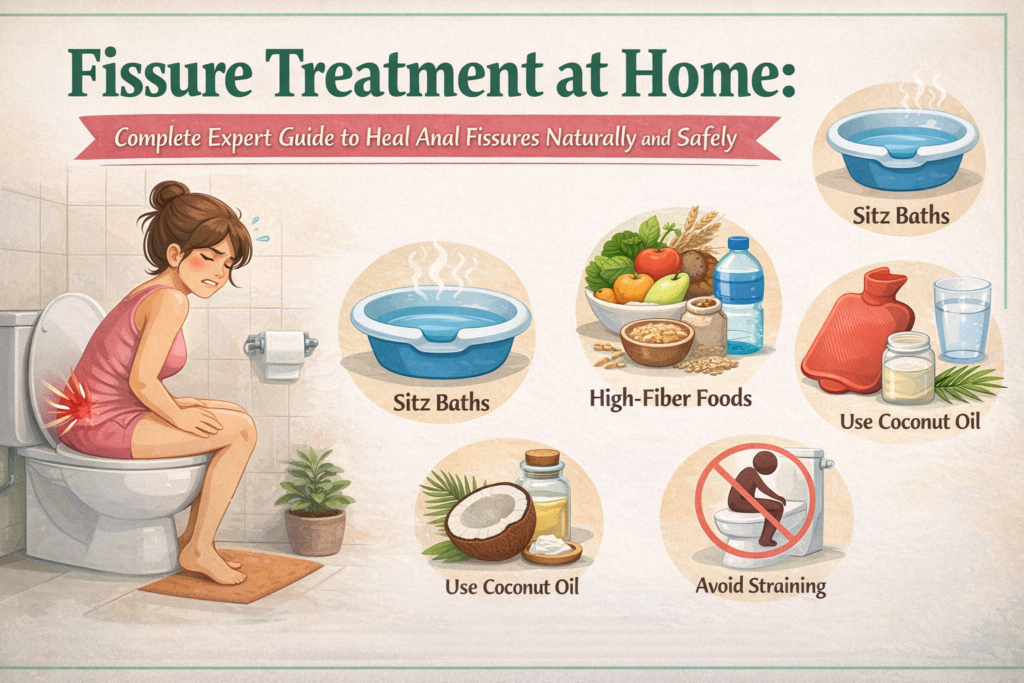
1. Increase Fiber Intake
Fiber softens stool and prevents further tearing.
Include:
-
Oats
-
Whole wheat
-
Brown rice
-
Green leafy vegetables
-
Fruits like papaya and pear
-
Flax seeds
Recommended intake: 25–35 grams daily.
2. Drink Plenty of Water
Drink 2.5–3 liters of water daily.
Hydration softens stool and reduces pain during bowel movements.
3. Sitz Bath Therapy
Sit in warm water for 15–20 minutes, 2–3 times daily.
Benefits:
-
Relaxes anal muscles
-
Improves blood flow
-
Reduces pain
-
Speeds healing
This is one of the most effective fissure, piles treatment at home methods.
4. Coconut Oil Application
Apply a small amount of pure coconut oil to the affected area.
It:
-
Moisturizes skin
-
Reduces inflammation
-
Promotes healing
5. Aloe Vera Gel
Use fresh aloe vera gel externally.
It soothes irritation and reduces burning.
6. Avoid Straining
Do not force bowel movements. Respond to natural urge immediately.
Avoid prolonged sitting on the toilet.
7. Gentle Physical Activity
Walking 20–30 minutes daily improves digestion and prevents constipation.
8. Use a Stool Softener (If Required)
If diet alone is insufficient, consult a doctor for safe stool softeners.
Do not self-medicate.
Diet Plan for Faster Healing
Morning
-
Warm water
-
Oats or vegetable porridge
Mid-Morning
-
Papaya or apple
Lunch
-
Whole wheat chapati
-
Dal
-
Green vegetables
-
Salad
Evening
-
Buttermilk
Dinner
-
Light khichdi or vegetable soup
Avoid:
-
Spicy food
-
Fried food
-
Processed snacks
-
Excess tea/coffee
A proper diet is the foundation of fissure treatment at home.
Pain Management Tips
-
Use warm compress
-
Avoid tight clothing
-
Maintain anal hygiene
-
Pat dry gently after washing
Good hygiene reduces infection risk.
When Home Treatment Is Not Enough
Consult a doctor if:
-
Pain persists beyond 3–4 weeks
-
Bleeding increases
-
Fissure keeps recurring
-
Severe muscle spasm develops
Chronic fissures may require medical procedures.
Medical Treatment Options
If fissure does not heal with home remedies, doctors may recommend:
-
Prescription ointments (to relax anal muscles)
-
Nitroglycerin-based creams
-
Calcium channel blocker creams
-
Botox injection (to relax sphincter muscle)
Laser Treatment for Chronic Fissure
Laser surgery is a minimally invasive procedure that:
-
Relieves muscle spasm
-
Removes scar tissue
-
Promotes faster healing
-
Causes minimal bleeding
-
Allows quicker recovery
It is recommended for chronic or recurrent fissures.
Recovery Timeline
-
Acute fissure: 2–4 weeks with proper care
-
Chronic fissure: May require medical treatment
Consistency in fissure treatment at home improves healing speed.
Can Fissure Heal Permanently?
Yes.
Most acute fissures heal completely with proper diet and bowel regulation.
However, recurrence can occur if constipation continues. Lifestyle correction is essential for permanent relief.
Prevention Tips
-
Maintain fiber-rich diet
-
Drink adequate water
-
Avoid constipation
-
Exercise regularly
-
Do not delay bowel movements
-
Avoid excessive spicy food
Prevention is the best long-term fissure treatment at home strategy.
Frequently Asked Questions (FAQs)
1. Can fissure heal without surgery?
Yes, most acute fissures heal with home care and diet changes.
2. How long does fissure pain last?
Pain usually reduces within 1–2 weeks with proper treatment.
3. Is bleeding in fissure dangerous?
Mild bright red bleeding is common, but persistent bleeding needs medical evaluation.
4. Can I use home remedies safely?
Yes, but avoid inserting anything internally without medical advice.
5. What is the fastest way to heal fissure?
Soft stool, sitz bath, hydration, and avoiding straining are the fastest healing combination.
Final Thoughts
Anal fissure can be painful, but early and consistent fissure treatment at home is highly effective in most cases.
The key factors are:
-
Soft bowel movements
-
Proper hydration
-
Regular sitz bath
-
Healthy lifestyle
If symptoms persist or worsen, do not delay professional consultation. Any inquiries Contact Us : +91 8767540001 Timely intervention prevents chronic complications and ensures long-term comfort.