
Piles (haemorrhoids) develop due to increased pressure on rectal veins, most commonly caused by constipation, straining, prolonged sitting, poor diet, and unhealthy lifestyle habits.
The good news is that most Haemorrhoids cases—especially early and moderate stages—can be reduced without surgery through consistent lifestyle correction and home-based care.
Below are 40 medically and practically proven ways to reduce piles (Haemorrhoids), focusing on digestion, bowel habits, posture, diet, and daily routine.
A. Diet & Digestion for Haemorrhoids (Most Important)
1. Increase daily fiber intake
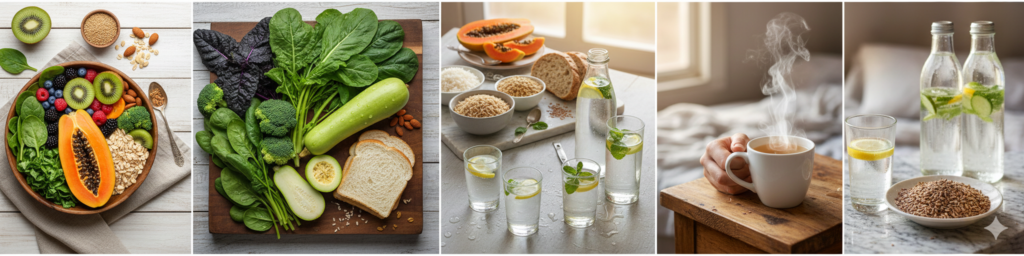
Fiber softens stools and reduces strain during bowel movements. A high-fiber diet also increases stool bulk, allowing smoother passage through the anal canal. Regular fiber intake lowers pressure on haemorrhoidal veins and helps prevent recurrence of piles symptoms.
2. Eat papaya regularly
Papaya contains natural digestive enzymes like papain that improve gut motility. Regular consumption helps prevent constipation and reduces excessive straining, which is a major trigger for piles. It also supports overall colon health.
3. Include green leafy vegetables
Vegetables such as spinach, lauki, pumpkin, and tori are rich in fiber, water, and essential minerals. They keep stools soft and promote regular bowel movements. Consistent intake helps reduce inflammation and pressure in the rectal area.
4. Replace refined grains with whole grains
Whole grains like oats, brown rice, and whole wheat contain insoluble fiber that improves intestinal movement. Refined flour lacks fiber and often leads to hard stools. Switching to whole grains supports long-term digestive health.
5. Drink 8–10 glasses of water daily
Adequate hydration keeps stools soft and easy to pass. Water works synergistically with fiber to prevent constipation. Insufficient water intake often negates the benefits of a high-fiber diet.
6. Start the day with warm water
Drinking warm water in the morning stimulates bowel reflexes and encourages natural evacuation. It helps cleanse the digestive tract and reduces dependency on laxatives. This simple habit can significantly improve morning bowel regularity.
7. Avoid spicy and masala-rich food
Spicy foods irritate the intestinal lining and can worsen burning, pain, and bleeding in piles patients. They also increase acidity, leading to discomfort during bowel movements. Reducing spices allows the anal tissues to heal faster.
8. Reduce fried and junk food
Fried and processed foods slow digestion and increase constipation. They are low in fiber and high in unhealthy fats, which aggravate piles symptoms. Avoiding junk food improves gut function and reduces inflammation.
9. Limit tea and coffee
Excess caffeine acts as a diuretic, causing dehydration. Dehydration leads to hard stools and painful bowel movements. Limiting caffeinated drinks helps maintain proper stool consistency.
10. Avoid alcohol completely
Alcohol dehydrates the body and dilates blood vessels, increasing the risk of bleeding Haemorrhoids. It also interferes with digestion and delays healing. Complete avoidance is strongly recommended during piles treatment
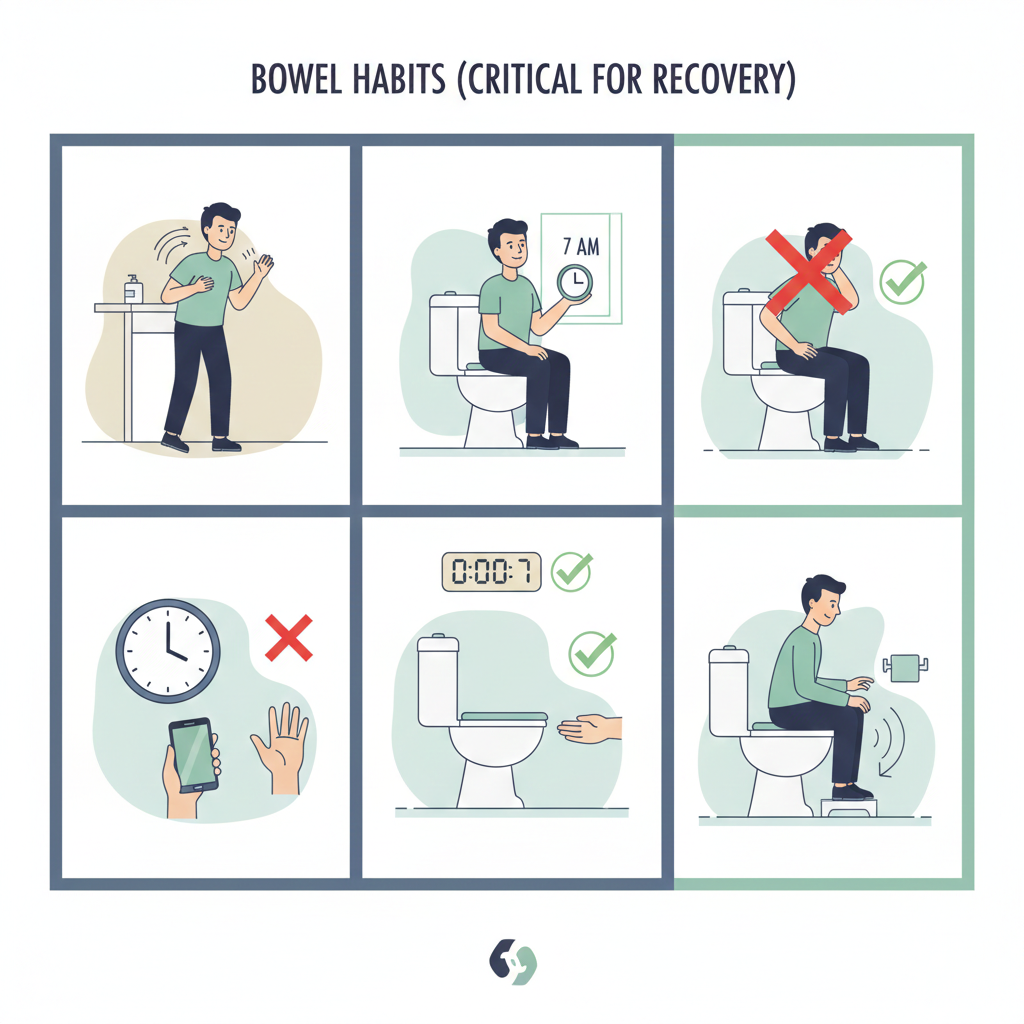
B. Bowel Habits for Haemorrhoids (Critical for Recovery)
11. Never suppress the urge to pass stool
Ignoring the natural urge causes stools to become harder as more water is absorbed in the colon. This leads to increased straining during the next bowel movement. Regular suppression significantly worsens Haemorrhoids and can trigger fissures.
12. Fix a regular bowel timing
Establishing a consistent bowel routine trains the digestive system to function efficiently. Morning bowel movements are ideal because intestinal activity is naturally higher after waking. Regular timing reduces constipation and dependency on laxatives.
13. Do not strain during bowel movement
Straining sharply increases pressure in the rectal veins, leading to swelling and bleeding haemorrhoids. It also delays healing in existing piles. Relaxed breathing and proper posture help stool pass naturally.
14. Avoid sitting long on the toilet
Prolonged sitting increases pressure on the anal veins due to gravity. This can worsen piles even without straining. Limiting toilet time to 5–7 minutes protects the rectal blood vessels.
15. Do not use mobile phone in the toilet
Using a mobile phone distracts attention and prolongs toilet sitting time. Longer sitting increases venous pressure and contributes to piles progression. Toilet time should be focused and brief.
16. Use a footstool while using the toilet
Raising the feet mimics a squatting position, which straightens the recto-anal angle. This posture reduces strain and allows easier stool passage. It is a simple yet highly effective habit for Haemorrhoids patients.
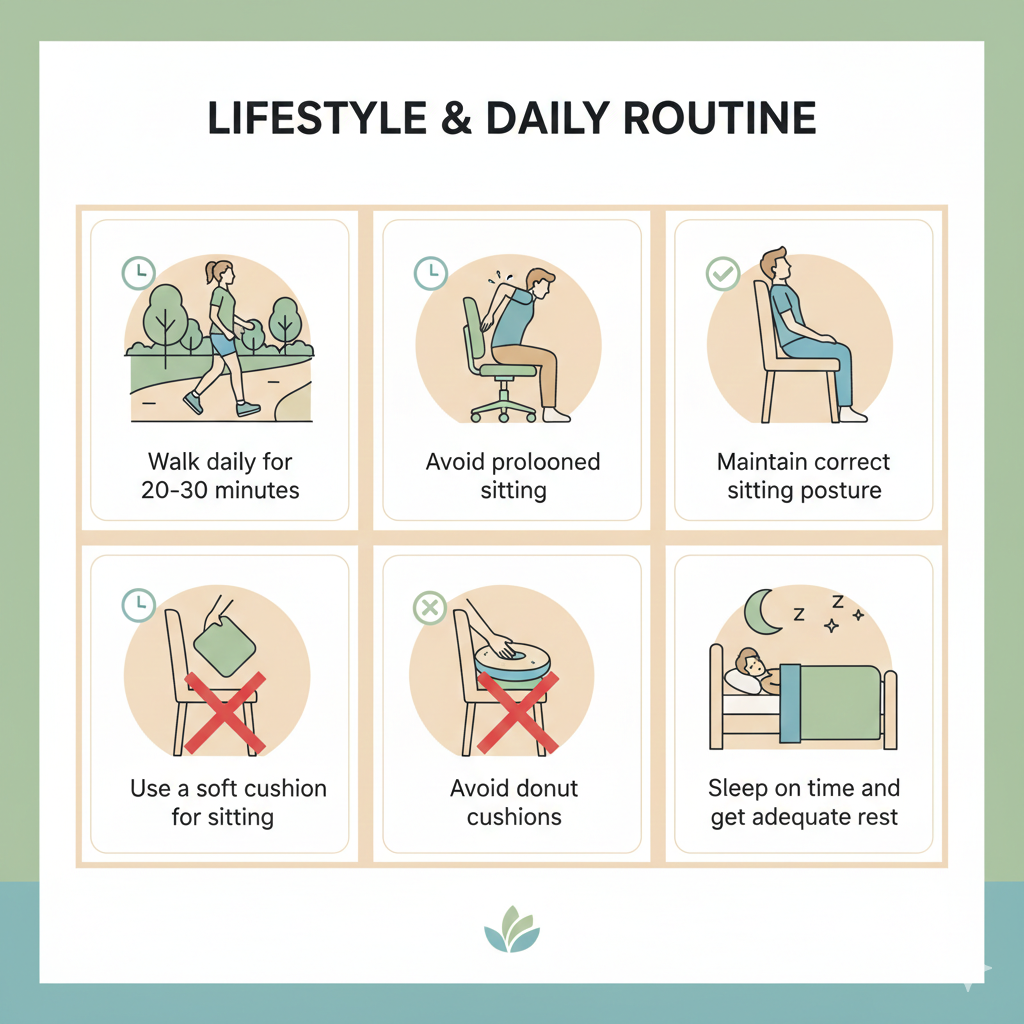
C. Lifestyle & Daily Routine for Haemorrhoids
17. Walk daily for 20–30 minutes
Regular walking stimulates intestinal movement and helps prevent constipation. It also improves blood circulation in the pelvic and rectal area, reducing venous congestion. Walking is one of the safest and most effective exercises for Haemorrhoids patients.
18. Avoid prolonged sitting
Sitting for long hours increases pressure on rectal veins and worsens piles symptoms. Taking short movement breaks every 30–45 minutes improves circulation. Simple stretching or standing can significantly reduce discomfort.
19. Maintain correct sitting posture
Sitting upright with proper back support reduces unnecessary pressure on the anal region. Slouching increases strain on pelvic muscles and rectal veins. Correct posture supports better blood flow and reduces pain.
20. Use a soft cushion for sitting
Soft cushions distribute body weight evenly and reduce pressure on the affected area. They help relieve pain during sitting, especially for people with desk jobs. Choosing the right cushion supports comfort and healing.
21. Avoid donut cushions
Donut-shaped cushions create uneven pressure around the anal opening. This can worsen swelling and delay healing of piles. Flat or memory foam cushions are medically preferred.
22. Sleep on time and get adequate rest
Proper sleep supports digestion, tissue repair, and immune function. Irregular sleep patterns can worsen constipation and slow healing. Quality rest is essential for long-term Haemorrhoids recovery.
D. Home Remedies That Help Reduce Haemorrhoids
23. Sitz bath with lukewarm water
Soaking the anal area in lukewarm water for 10–15 minutes helps relax the anal muscles. It improves blood circulation, reduces swelling, and provides significant relief from pain and itching. Regular sitz baths also promote faster healing of inflamed tissues.
24. Apply coconut oil externally
Coconut oil acts as a natural moisturizer and anti-inflammatory agent. External application reduces dryness, friction, and irritation during bowel movements. It also helps protect the sensitive skin around the anus from further damage.
25. Use aloe vera gel externally
Aloe vera has soothing and cooling properties that help reduce inflammation and burning sensations. Applying pure, fresh aloe vera gel can calm irritated tissues and support skin healing. It should be used externally only.
26. Take Isabgol (psyllium husk) if constipated
Isabgol absorbs water and increases stool bulk, making stools soft and easy to pass. It reduces straining, which is crucial for Haemorrhoids management. It should always be taken with plenty of water and preferably under medical guidance.
27. Drink buttermilk daily
Buttermilk contains probiotics that improve digestion and maintain healthy gut flora. It helps prevent constipation and reduces digestive discomfort. Adding a pinch of roasted cumin powder can further enhance its digestive benefits.
28. Consume amla (Indian gooseberry)
Amla is rich in vitamin C and antioxidants that strengthen blood vessel walls. Regular intake helps reduce bleeding and inflammation in haemorrhoids. It also supports digestion and improves overall bowel health.
E. Exercise & Physical Activity for Haemorrhoids
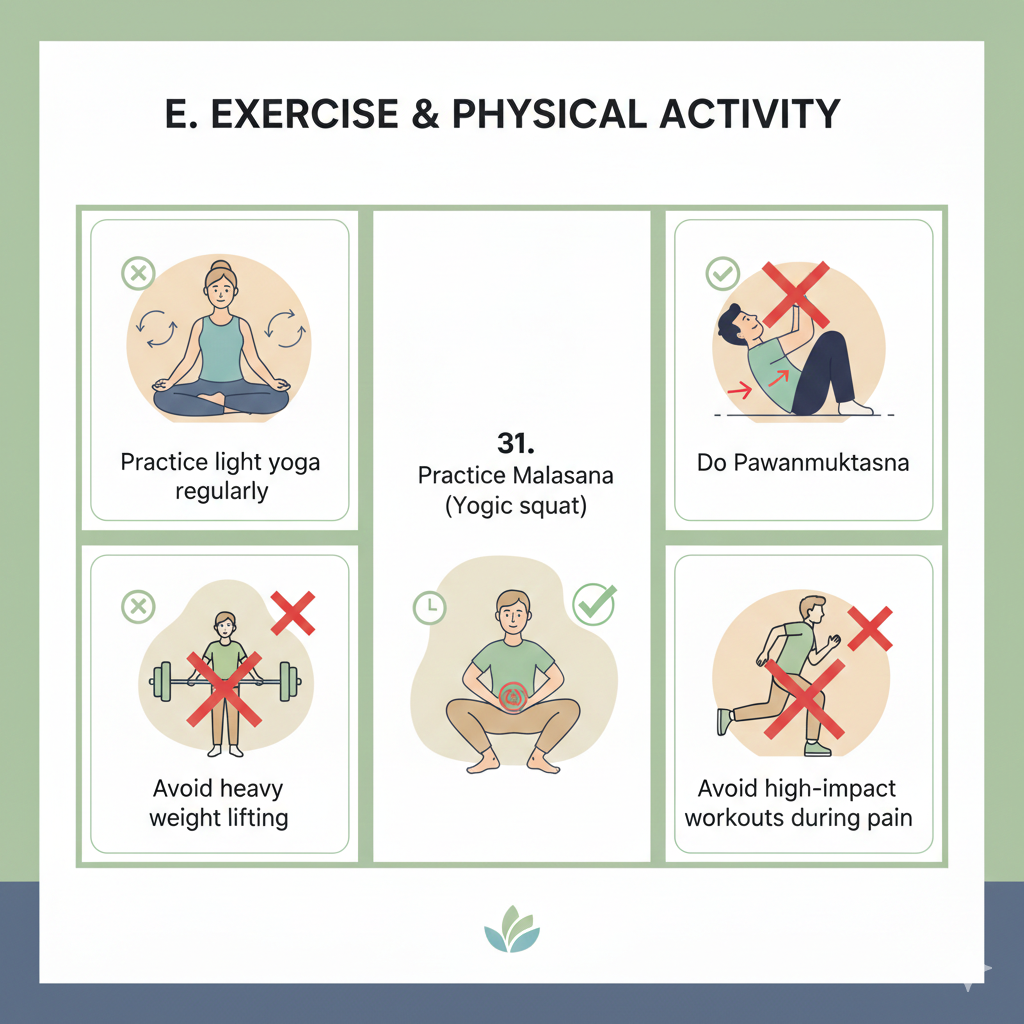
29. Practice light yoga regularly
Light yoga improves digestion, enhances blood circulation, and reduces pressure on the rectal veins. Gentle movements relax abdominal muscles and support smooth bowel function. Regular practice also helps reduce stress, which indirectly improves gut health.
30. Do Pawanmuktasana (Wind-Relieving Pose)
Pawanmuktasana is highly effective for relieving gas, bloating, and constipation. It stimulates intestinal movement and reduces abdominal pressure. Practicing this pose daily can significantly ease bowel movements in Haemorrhoids patients.
31. Practice Malasana (Yogic squat)
Malasana helps align the recto-anal angle, allowing stools to pass with less strain. It strengthens pelvic muscles and improves bowel control. Regular practice supports natural and effortless bowel movements.
32. Avoid heavy weight lifting
Heavy lifting increases intra-abdominal pressure, which directly worsens haemorrhoidal swelling. It can also trigger bleeding in existing Haemorrhoids. Patients should avoid lifting heavy weights until symptoms fully resolve.
33. Avoid high-impact workouts during pain
Activities like running, jumping, or intense cycling can aggravate pain and swelling. High-impact exercises increase pressure and friction in the anal region. Low-impact activities such as walking and gentle stretching are safer alternatives.
F. Special Care for Bleeding Haemorrhoids
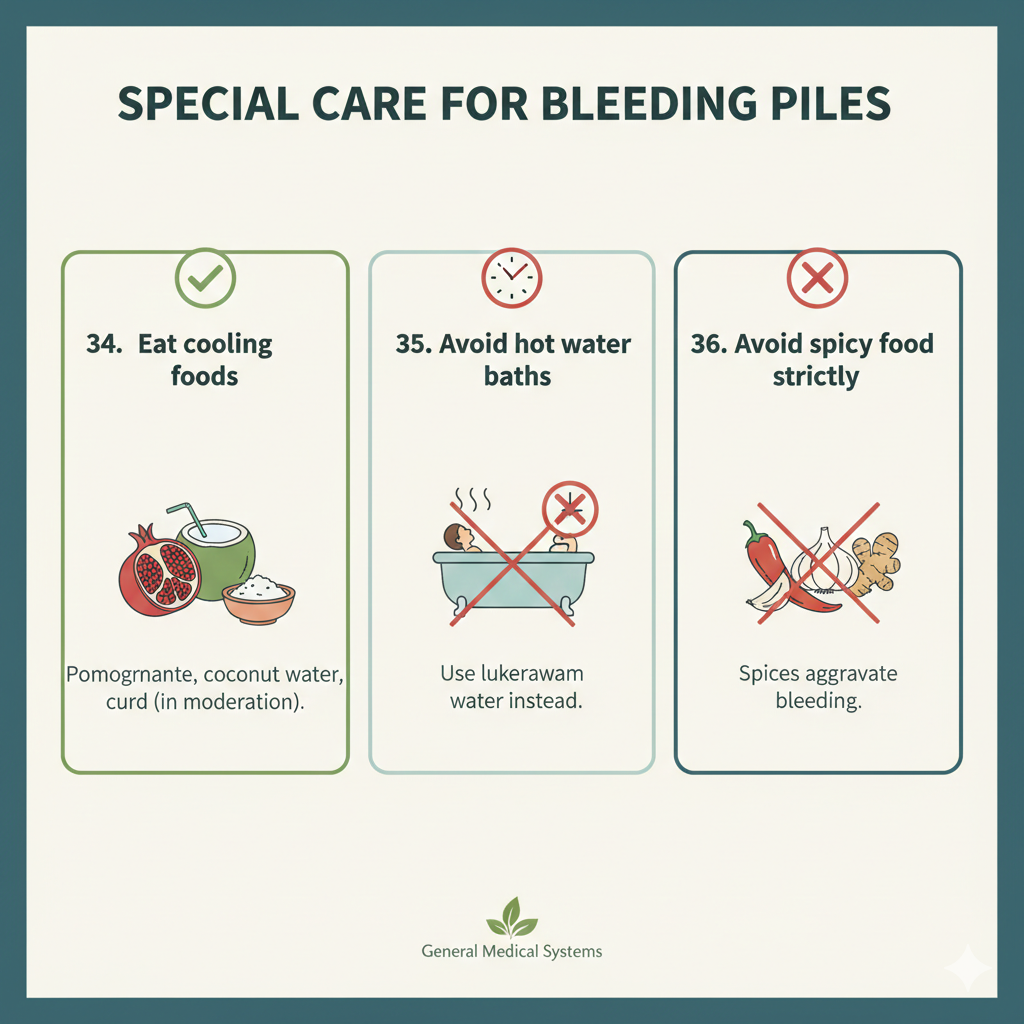
34. Eat cooling foods
Cooling foods such as pomegranate, coconut water, and curd (in moderation) help reduce internal heat and inflammation. They soothe the digestive system and support smooth bowel movements. These foods are especially beneficial for patients with burning sensation and bleeding Hemorrhoid’s .
35. Avoid hot water baths
Hot water can increase blood flow to the anal area, which may worsen swelling and bleeding. Lukewarm water is safer and more soothing for inflamed tissues. Always prefer lukewarm water for bathing and cleaning during Haemorrhoids treatment.
36. Avoid spicy food strictly
Spicy foods irritate the intestinal lining and increase anal burning during bowel movements. They can worsen bleeding and delay healing. Strict avoidance of spices is essential until piles symptoms completely subside.
G. Stress & Long-Term Prevention
37. Manage stress effectively
Chronic stress directly affects digestion and bowel regularity by altering gut motility. Stress can worsen constipation, acidity, and straining. Practices such as meditation, deep breathing, and adequate rest help maintain healthy bowel habits.
38. Eat meals at fixed times
Regular meal timing supports a stable digestive rhythm and proper enzyme release. Irregular eating weakens digestion and increases the risk of constipation. Consistent meal schedules help maintain predictable and healthy bowel movements.
39. Maintain healthy body weight
Excess body weight increases pressure on the pelvic and rectal veins, worsening piles symptoms. Obesity also reduces physical activity, contributing to constipation. Gradual weight management supports long-term piles prevention.
40. Consult a doctor if symptoms persist
Persistent pain, bleeding, or swelling should not be ignored. Early medical consultation helps identify the severity of piles and prevents complications such as anemia or infection. Timely guidance can often avoid the need for surgery. Any inquiries Contact Us : +91 8767540001
Final Thoughts
Haemorrhoids are not merely a rectal condition—they are a reflection of poor digestion, irregular bowel habits, prolonged sitting, stress, and unhealthy lifestyle choices. Relying only on painkillers, creams, or temporary medicines cannot ensure permanent relief if the root causes are not addressed.
By consistently following these 40 proven ways to reduce Haemorrhoids, most patients naturally experience:
Softer and regular bowel movements
Significant reduction in pain, swelling, and bleeding
Faster healing of inflamed veins
Improved digestion and gut health
A much lower risk of Haemorrhoids recurrence
Better comfort during sitting, walking, and daily activities
Role of Ayurvedic Medicines in Long-Term Haemorrhoids Relief
Ayurveda focuses on correcting digestion (Agni), balancing Vata and Pitta, and healing tissues from within. When combined with lifestyle changes, Ayurvedic Hemorrhoid’s treatment at home offers safe, surgery-free, and long-lasting relief.
Doctor-recommended Ayurvedic and herbal medicines may help by:
Softening stools naturally without dependency
Reducing inflammation and bleeding
Healing fissures and swollen haemorrhoids
Strengthening rectal veins
Improving liver and gut function
Commonly used Ayurvedic ingredients include Triphala, Arshoghni Vati, Neem, Haritaki, Isabgol, Aloe Vera, Nagkesar, and natural herbal oils—all chosen based on symptom severity and body constitution.
Start Your Natural Healing Journey Today
Remember, small daily changes practiced consistently lead to permanent Haemorrhoids relief without surgery. Early care prevents complications and avoids invasive procedures.
If you are looking for safe, effective piles treatment at home using Ayurvedic and herbal medicines, expert guidance is essential for correct dosage and lasting results.
Consult our specialists & explore trusted Ayurvedic solutions
Visit: www.pilestreatmentathome.com
Your journey toward pain-free, healthy digestion starts with the right knowledge and natural care.