
Piles, also known as haemorrhoids, are among the most common yet misunderstood health conditions today. Many patients delay treatment due to fear, embarrassment, or misinformation—often worsening the condition unnecessarily.
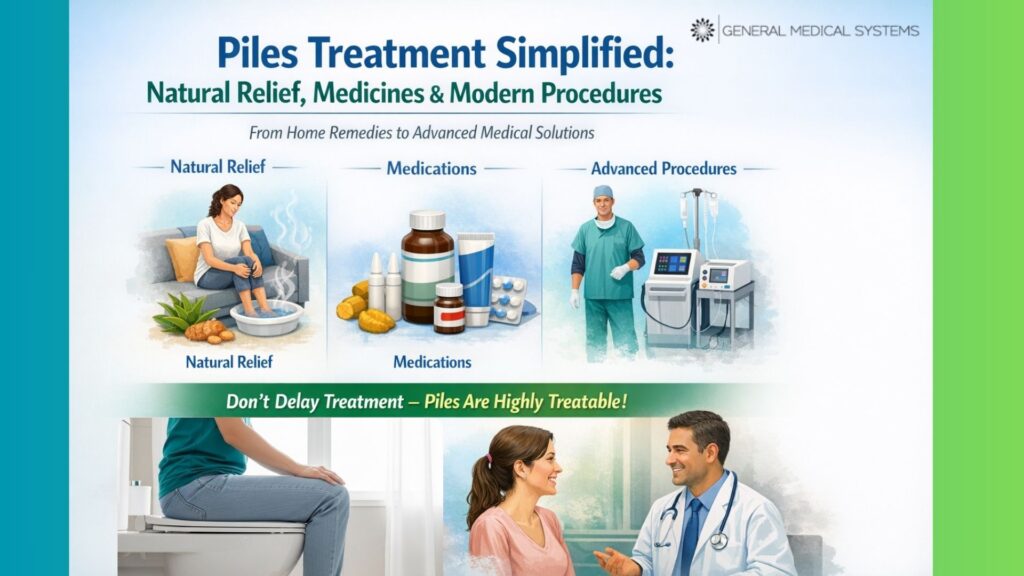
The truth is simple: piles are highly treatable, and in most cases, surgery is not the first or only option. With the right understanding, piles treatment can be approached step-by-step—from natural relief at home to medicines and, only when required, modern medical procedures.
This comprehensive guide simplifies piles treatment so patients can make informed, confident decisions.
What Are Piles?
Piles are swollen, inflamed veins in the rectum or around the anus. These veins normally help control bowel movements, but excessive pressure causes them to enlarge, stretch, and become symptomatic.
Types of Piles
Internal Piles
Located inside the rectum
Usually painless
Main symptom: bleeding during motion
External Piles
Located around the anus
Painful, itchy, sometimes swollen
Prolapsed Piles
Internal piles that come out during bowel movement
May go back inside or remain outside
Thrombosed Piles
External piles with blood clot
Severe pain and swelling
Understanding the type and stage of piles is essential for choosing the right treatment.
Why Do Piles Develop? (Root Causes)
Piles rarely occur suddenly. They develop gradually due to continuous strain and digestive imbalance.
Common Causes
Chronic constipation
Hard stool and excessive straining
Low-fiber diet
Poor digestion and gas
Prolonged sitting (office work, driving)
Obesity
Pregnancy
Sedentary lifestyle
Irregular eating habits
👉 Medical insight: Over 80% of piles cases are linked directly or indirectly to constipation and poor digestion.
Symptoms of Piles You Should Not Ignore
Early detection prevents complications.
Common Symptoms
Bright red bleeding during bowel movement
Pain or burning sensation
Itching around the anus
Swelling or lump near the anus
Feeling of incomplete bowel evacuation
Ignoring early symptoms often leads to advanced stages requiring medical procedures.
Piles Treatment Approach: Step-by-Step
Piles treatment should always progress from least invasive to advanced, based on severity.
PART 1: NATURAL RELIEF (FOUNDATION OF ALL TREATMENT)
Natural treatment is not optional—it is the foundation, even if medicines or procedures are required later.
1. Correct Constipation (Most Important Step)
No piles treatment works unless stool becomes soft.
Natural Ways to Soften Stool
High-fiber diet (vegetables, fruits, whole grains)
Isabgol (psyllium husk): 1–2 teaspoons at night
2.5–3 liters of water daily
Soft stool alone can heal early piles.
2. Improve Digestion Naturally
Poor digestion leads to gas, pressure, and recurrence.
Helpful Remedies
Triphala powder (½–1 tsp at bedtime)
Buttermilk after lunch (with roasted cumin)
Avoid late-night heavy meals
From an Ayurvedic perspective, piles are a digestive disorder, not just a rectal problem.
3. Sitz Bath (Doctor-Recommended Home Therapy)
A sitz bath is one of the most effective home treatments.
How to do it:
Sit in warm water
10–15 minutes
Twice daily or after bowel movement
Benefits
Reduces pain and burning
Relaxes anal muscles
Improves blood circulation
Speeds healing
4. Natural External Applications
For pain, dryness, and irritation:
Aloe vera gel
Coconut oil
Cold compress (5 minutes)
Avoid overuse of chemical creams without guidance.
5. Diet for Natural Healing
Eat More
Papaya, pear, figs
Green leafy vegetables
Oats, barley
Ghee in small quantity
Avoid Strictly
Spicy and fried food
Alcohol and smoking
Junk and processed food
Excess tea or coffee
Diet control often determines treatment success.
6. Lifestyle Changes That Prevent Recurrence
Avoid prolonged sitting
Walk 20–30 minutes daily
Do not strain during bowel movement
Avoid sitting on the toilet for long
Small daily habits bring long-term relief.
PART 2: MEDICINES FOR PILES (WHEN HOME CARE IS NOT ENOUGH)
When symptoms persist despite lifestyle correction, medicines are added.
Modern (Allopathic) Medicines
Doctors may prescribe:
Stool softeners
Anti-inflammatory ointments
Pain-relieving suppositories
Short-term laxatives
⚠️ These provide symptom relief, but long-term dependency should be avoided.
Ayurvedic Medicines for Piles (Root-Cause Approach)
Ayurveda focuses on digestion, inflammation, and vein healing.
Commonly Used Herbs
Triphala – bowel regulation
Haritaki – improves digestion
Nagkesar – controls bleeding
Neem – reduces inflammation
Bael fruit – strengthens intestines
Benefits
Non-habit forming
Works from the root
Reduces recurrence
Safe for long-term use (under guidance)
For expert-recommended Ayurvedic solutions, visit:
👉 www.pilestreatmentathome.com
PART 3: MODERN MEDICAL PROCEDURES (WHEN NECESSARY)
When piles are advanced, prolapsed, or not responding to conservative treatment, procedures may be required.
When Procedures Are Considered
Continuous or heavy bleeding
Prolapsed piles
Severe pain
Anemia
No relief after proper treatment
Non-Surgical / Minimally Invasive Options
1. Rubber Band Ligation
Cuts blood supply to piles
Piles shrink and fall off
Outpatient procedure
2. Injection Sclerotherapy
Shrinks pile mass
Useful for early internal piles
3. Infrared Coagulation
Uses heat to reduce blood flow
Advanced Laser Treatment
Laser piles treatment is widely used today.
Benefits
Minimal pain
Minimal bleeding
Day-care procedure
Fast recovery
Laser treatment treats the pile mass but lifestyle correction is still mandatory to prevent recurrence.
Traditional Surgery (Last Option)
Used only in severe cases:
Large prolapsed piles
Multiple recurrent piles
Recovery time is longer, and post-operative care is crucial.
Can Piles Be Cured Permanently?
Yes—piles can be cured permanently if:
Constipation is corrected
Digestion is improved
Lifestyle changes are maintained
Treatment is taken early
No treatment—natural, medicinal, or surgical—will succeed permanently without habit correction.
Common Mistakes Patients Make
Ignoring bleeding
Overusing laxatives
Self-medicating creams
Avoiding doctor consultation
Stopping treatment early
Awareness prevents complications.
When to See a Doctor Immediately
Bleeding lasts more than 3–4 days
Severe pain or swelling
Piles coming out and not going back
Weakness or dizziness
Early consultation saves time, money, and surgery.
Final Doctor’s Advice
Piles treatment does not have to be confusing or frightening. When approached step-by-step—starting with natural relief, supported by medicines, and using modern procedures only when necessary—most patients recover fully.
The goal is not temporary relief, but long-term digestive health and recurrence prevention.
Treat piles early. Treat them wisely. Treat them at the root.