
Introduction
Piles (hemorrhoids) are often linked to lifestyle habits, especially lack of movement. Many patients ask:
 “Can simple walking really help in piles?”
The answer is YES—and it’s one of the safest and most effective natural remedies.
This guide explains:
- How walking helps piles
- Best way to walk for relief
- Mistakes to avoid
- Complete routine for long-term results
Why Exercise Matters in Piles
Piles are mainly caused by:
- Poor digestion
- Constipation
- Increased pressure in rectal veins
A sedentary lifestyle worsens all of these.
That’s where walking plays a key role.
Is Walking Good for Piles?
 Yes—Walking Is Highly Beneficial
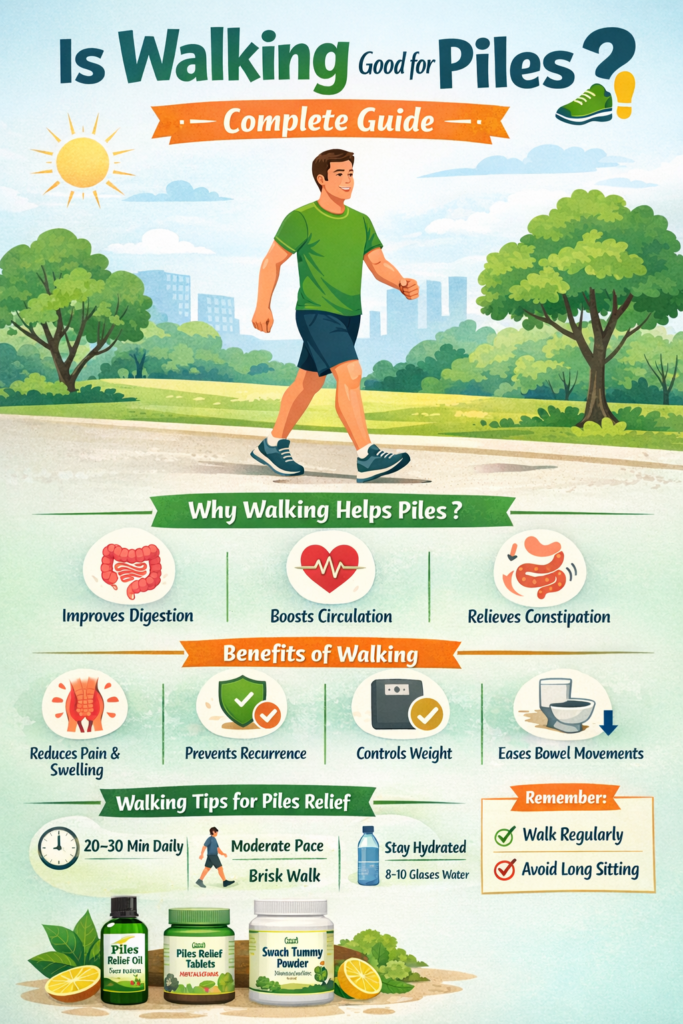
Walking is a low-impact exercise that:
- Improves blood circulation
- Reduces pressure on rectal veins
- Helps bowel movement
- Prevents constipation
All these directly help in reducing piles symptoms.
Key Benefits of Walking for Piles
1. Relieves Constipation (Root Cause)
Walking stimulates intestinal movement.
Helps easy bowel movement Reduces straining
Less strain = less pressure on piles
2. Improves Blood Circulation
Poor circulation causes swelling in veins.
Walking boosts blood flow Reduces inflammation and swelling
3. Reduces Pain & Discomfort
Regular walking:
- Decreases pressure in anal area
- Helps reduce pain gradually
4. Prevents Recurrence
One of the biggest benefits
Walking keeps:
- Digestion active
- Body weight controlled
- Veins healthy
5. Supports Weight Management
Excess weight increases pressure on rectal veins.
Walking helps maintain healthy weight Reduces piles risk
How to Walk for Piles Relief (Correct Method)
Duration
- 20–30 minutes daily
- Beginners: Start with 10–15 minutes
Timing
- Morning (best for digestion)
- Evening (optional second walk)
Speed
- Moderate pace (not too fast)
Posture
- Keep back straight
- Avoid slouching
Walking Mistakes to Avoid
 Sitting immediately after walking
- Walking right after heavy meals
- Overexertion in severe pain
- Ignoring hydration
Combine Walking with These Habits
Healthy Diet
- Fiber-rich foods
- Plenty of water
Proper Toilet Habits
- Don’t strain
- Don’t sit too long
Stress Management
- Stress can worsen constipation
GMS Piles Care Support (For Better Results)
Walking works best when combined with proper treatment.
GMS Piles Relief Oil
- Reduces external swelling and burning
- Provides soothing effect after walking
GMS Piles Relief Tablets
- Help reduce internal inflammation
- Support vein healing
GMS Swach Tummy Powder
- Prevents constipation
- Ensures smooth bowel movement
Why Combine Walking + GMS?
Walking: Improves circulation
GMS: Treats symptoms + root cause
Together they provide faster and long-lasting relief
When Walking Alone Is Not Enough
Walking helps, but may not be sufficient if:
- Severe bleeding
- Advanced piles (Grade 3 or 4)
- Extreme pain
In such cases, consult a doctor.
Expert Routine for Best Results
Morning
- Warm water
- 20–30 min walk
Day
- High-fiber meals
- Hydration
Evening
- Light walk (optional)
Night
- Light dinner
- Avoid spicy food
Walking vs Other Exercises
| Exercise | Suitable for Piles? | Notes |
|---|---|---|
| Walking |  Best Best | Safe & effective |
| Yoga | Very good | Improves digestion |
| Running |  Limited Limited | Avoid in pain |
| Weight lifting | Not recommended | Increases pressure |
Expert Insight
Walking is not just helpful—it’s essential for piles recovery.
But remember:
“Walking relieves symptoms, but consistency prevents recurrence.”
Final Takeaway
Walking daily can:
- Reduce pain
- Improve digestion
- Prevent piles
Combine with:
- Proper diet
- Lifestyle changes
- GMS treatment
For best long-term results without surgery
FAQs
Q1. How much walking is enough for piles?
20–30 minutes daily is ideal.
Q2. Can walking reduce piles size?
It can help reduce swelling in early stages.
Q3. Is walking better than gym exercise?
Yes, for piles—low-impact is safer.
Q4. Can I walk during pain?
Yes, but keep it slow and comfortable.