
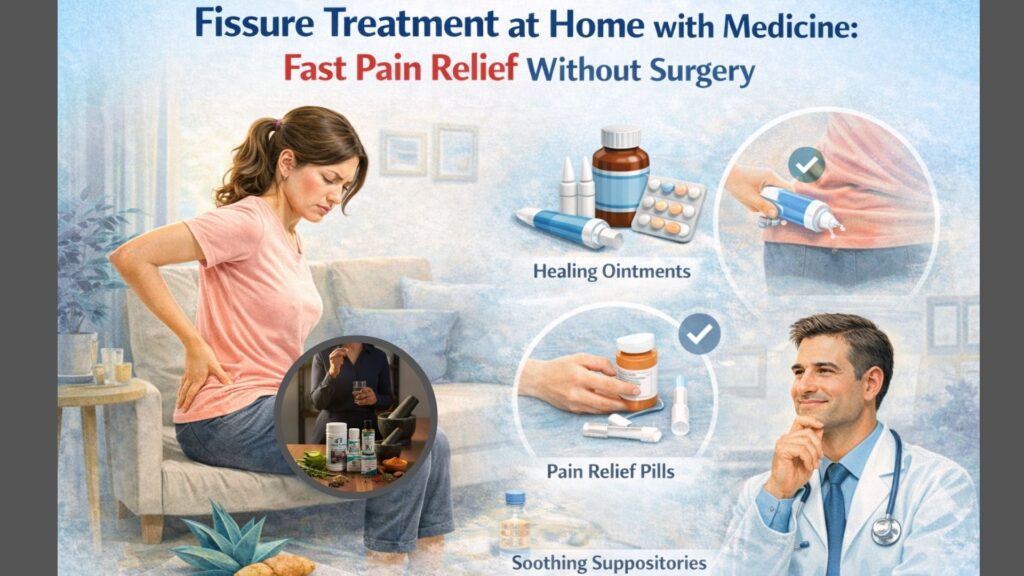
An anal fissure is a small tear or crack in the lining of the anal canal. Though small in size, the pain caused by a fissure can be intense and distressing. Patients often describe sharp, cutting pain during bowel movements, followed by burning or throbbing discomfort that can last for hours. Because of fear and embarrassment, many people delay treatment, assuming surgery is the only solution.
The medical reality is reassuring: most anal fissures—especially acute fissures—can be treated successfully at home with medicines and lifestyle correction, without surgery. Early, proper treatment not only relieves pain quickly but also prevents the fissure from becoming chronic.
This expert guide explains how to treat fissure at home using medicines, how to get fast pain relief, and when medical intervention becomes necessary.
What Is an Anal Fissure?
An anal fissure is a longitudinal tear in the sensitive skin of the anal canal. It commonly develops due to trauma caused by hard stools, repeated straining, or prolonged constipation.
Common Symptoms of Fissure
Sharp pain during or after passing stools
Burning or tearing sensation
Bright red blood on toilet paper or stool surface
Fear of bowel movements due to pain
Anal muscle spasm
Types of Anal Fissure
Acute Fissure
Present for less than 6 weeks
Fresh tear
Responds very well to home treatment and medicines
Chronic Fissure
Lasts more than 6 weeks
Deep tear with thickened edges
Often associated with a skin tag
May need advanced treatment
Home treatment is most effective in acute fissures and early chronic fissures.
Why Pain Is So Severe in Fissure
Pain in fissure is not just due to the tear itself. The key factor is spasm of the internal anal sphincter muscle. This spasm:
Reduces blood flow to the area
Delays healing
Increases pain after defecation
Effective fissure treatment focuses on reducing muscle spasm, improving blood flow, and keeping stools soft.
Fissure Treatment at Home with Medicine
1. Topical Ointments (Mainstay of Treatment)
Medicated ointments are the most important part of fissure treatment at home.
a) Nitrate or Calcium Channel Blocker Ointments
These ointments help by:
Relaxing anal muscles
Improving blood supply
Promoting healing of the fissure
They are usually applied inside and around the anal opening, as prescribed.
b) Local Anesthetic Ointments
Used for:
Immediate pain relief
Reducing burning sensation
These provide symptomatic relief and are best used before bowel movements.
2. Oral Medicines for Fissure
a) Stool Softeners
Stool softeners are essential to prevent further injury to the fissure. They:
Reduce stool hardness
Minimize pain during defecation
Allow natural healing
They should be taken regularly, not occasionally.
b) Pain Relief Tablets
Mild painkillers like paracetamol are preferred
Avoid excessive use of strong painkillers without medical advice
c) Medicines to Improve Healing
In some cases, doctors prescribe medicines that improve blood circulation and reduce inflammation.
Sitz Bath Therapy: Natural Pain Relief
Warm sitz baths are strongly recommended in fissure care.
How It Helps
Relaxes anal muscles
Reduces pain and spasm
Improves local blood flow
How to Do It
Sit in warm water for 15–20 minutes
Repeat 2–3 times daily, especially after bowel movements
Avoid adding harsh antiseptics or soaps.
Dietary Management: The Foundation of Healing
High-Fiber Diet (Non-Negotiable)
A fiber-rich diet prevents constipation and re-injury.
Include:
Green leafy vegetables
Fruits like papaya, apple, pear, figs
Whole grains and oats
Lentils and pulses
Aim for 25–30 grams of fiber daily.
Adequate Water Intake
Drink 2.5–3 liters of water daily to keep stools soft and regular.
Dehydration is one of the biggest reasons fissures fail to heal.
Lifestyle Changes That Speed Up Recovery
1. Correct Toilet Habits
Avoid straining
Do not sit on the toilet for long periods
Respond promptly to bowel urges
2. Physical Activity
Daily walking improves bowel movement
Avoid prolonged sitting
3. Proper Anal Hygiene
Clean gently with water
Avoid rough toilet paper
Keep the area dry
Home Remedies That Support Medical Treatment
1. Coconut Oil (External Use)
Reduces dryness
Soothes irritated skin
2. Aloe Vera Gel
Anti-inflammatory
Promotes skin healing
Use only pure, chemical-free gel.
3. Psyllium Husk (Isabgol)
Natural fiber supplement
Improves stool consistency
Take as advised by a healthcare professional.
How Long Does Home Treatment Take to Work?
Pain relief often begins within 3–7 days
Healing usually occurs within 2–4 weeks
Complete recovery depends on consistency
Stopping medicines too early is a common reason for recurrence.
Common Mistakes That Delay Healing
Skipping stool softeners
Irregular diet and hydration
Overuse of laxatives
Applying unverified home remedies
Ignoring persistent pain
When Fissure Treatment at Home Is NOT Enough
Consult a doctor if:
Pain persists beyond 2–3 weeks
Bleeding continues
Pain is severe and constant
A skin tag develops
Fissure becomes recurrent
These signs may indicate a chronic fissure.
Advanced Treatment Options (If Needed)
Modern treatments for fissure include:
Botox injection
Laser fissure treatment
Lateral internal sphincterotomy (selected cases)
These are safe, effective, and performed when conservative treatment fails.
Can Fissure Be Cured Permanently Without Surgery?
Yes, most acute fissures heal completely without surgery if treated early and properly. Long-term prevention depends on:
Lifelong attention to diet
Regular bowel habits
Avoiding constipation
Patients who correct lifestyle factors rarely experience recurrence.
Frequently Asked Questions
Is fissure pain worse than piles pain?
Yes, fissure pain is often sharper and more severe, especially after bowel movements.
Can fissure heal on its own?
Mild fissures may heal, but medicines speed recovery and reduce complications.
Is walking good for fissure?
Yes, walking improves digestion and reduces constipation.
Can fissure cause bleeding daily?
Yes, small amounts of bleeding may occur until healing begins.
Final Expert Opinion
Anal fissure is a painful but highly treatable condition. With timely fissure treatment at home using medicines, ointments, and disciplined lifestyle changes, most patients experience fast pain relief and complete healing—without surgery. Early action is the key to avoiding chronic fissure and unnecessary procedures.
If symptoms do not improve despite proper home treatment, timely medical evaluation ensures safe and effective advanced care. Any inquiries Contact Us : +91 8767540001