
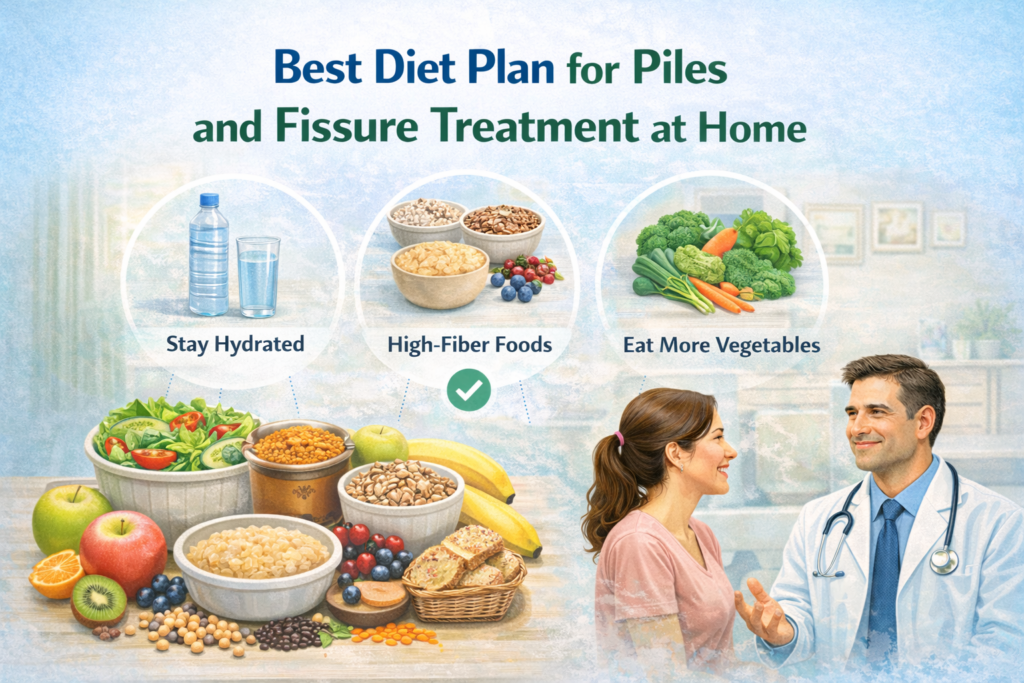
Piles (haemorrhoids) and anal fissure are not just local anal conditions—they are digestive disorders strongly linked to diet and bowel habits. In clinical practice, patients who correct their diet often recover faster than those relying only on medicines.
A well-planned diet helps by:
Softening stools
Reducing strain during bowel movements
Healing inflamed veins and anal cracks
Preventing recurrence without surgery
This doctor-recommended diet plan is designed specifically for piles and fissure treatment at home.
Why Diet Is the Most Important for Piles and Fissure Treatment at Home
Constipation is the root cause of both conditions.
When stools are hard:
Piles veins swell and bleed
Fissures reopen repeatedly
Pain and burning increase
Medicines can reduce symptoms, but only diet can correct the cause.
Core Principles of a Piles & Fissure Diet
An effective diet must:
Increase stool bulk
Improve water content in stools
Support gut movement
Reduce inflammation
This is achieved through fiber, fluids, and proper timing of meals.
Foods to Eat for Piles and Fissure Recovery
1. High-Fiber Fruits (Daily)
Fruits soften stools naturally.
Best options:
Papaya
Pear
Apple (with peel)
Guava
Kiwi
Oranges
 Eat 1–2 fruits daily, preferably in the morning or mid-day.
2. Vegetables That Heal Digestion
Cooked vegetables are easier to digest.
Recommended:
Bottle gourd (lauki)
Ridge gourd (tori)
Pumpkin
Spinach
Carrot
Beetroot
Avoid raw vegetables if digestion is weak.
3. Whole Grains for Regular Bowel Movement
Refined flour worsens constipation.
Choose instead:
Whole wheat roti
Oats
Brown rice
Millets (jowar, bajra)
These improve stool consistency.
4. Natural Stool-Softening Foods
These foods act gently without habit formation.
Soaked raisins (5–6 overnight)
Figs (1–2 soaked)
Flaxseeds (1 tsp daily)
Isabgol (if advised by doctor)
5. Probiotic Foods for Gut Health
Healthy gut bacteria prevent constipation.
Homemade curd
Buttermilk
Fermented foods (in moderation)
Best Fluids for Piles and Fissure Patients
Water intake is as important as fiber.
Daily Requirement
2.5–3 liters spread throughout the day
Helpful Fluids
Warm water in the morning
Coconut water
Herbal teas
Vegetable soups
Avoid drinking large quantities at once.
Foods to Avoid Completely
Certain foods delay healing and increase pain.
Avoid:
Spicy foods
Fried and junk food
Bakery items
Cheese and excess dairy
Red meat
Alcohol
Excess tea and coffee
These cause dehydration and hard stools.
One-Day Sample Diet Plan for Piles & Fissure
Morning (6–7 AM)
1 glass warm water
5 soaked raisins or 1 soaked fig
Breakfast
Oats porridge / vegetable poha
1 fruit
Mid-Morning
Coconut water / buttermilk
Lunch
Whole wheat roti or brown rice
Cooked vegetables
Dal or curd
Evening
Fruit or roasted chana
Herbal tea
Dinner (Before 8 PM)
Light meal (khichdi / vegetable soup)
Before Bed
Warm water (Isabgol if prescribed)
Diet Tips Specifically for Fissure Patients
Fissure pain increases with even mild constipation.
Extra care needed:
Prefer semi-solid foods initially
Avoid chilies completely
Take warm fluids at night
Never delay bowel movement
Soft stools are essential for fissure healing.
Role of Ayurvedic Diet Support
Ayurveda emphasizes digestive balance.
Common supportive foods:
Triphala-based preparations
Warm, freshly cooked meals
Ghee in small quantities
For guided Ayurvedic treatment and diet plans, visit: www.pilestreatmentathome.com
Common Diet Mistakes Patients Make
Increasing fiber without water
Skipping meals
Relying on laxatives daily
Eating late at night
Sudden extreme diet changes
Consistency is more important than extremes.
How Long Does Diet Take to Show Results?
With proper diet:
Stool softening: 2–3 days
Pain reduction: 4–7 days
Healing begins: 1–2 weeks
Permanent relief requires long-term adherence.
Final Doctor’s Advice
Piles and fissure are signals from the digestive system, not just local anal problems. Correcting diet is the safest, most effective, and permanent treatment at home.
Medicines help symptoms—diet cures the condition.