
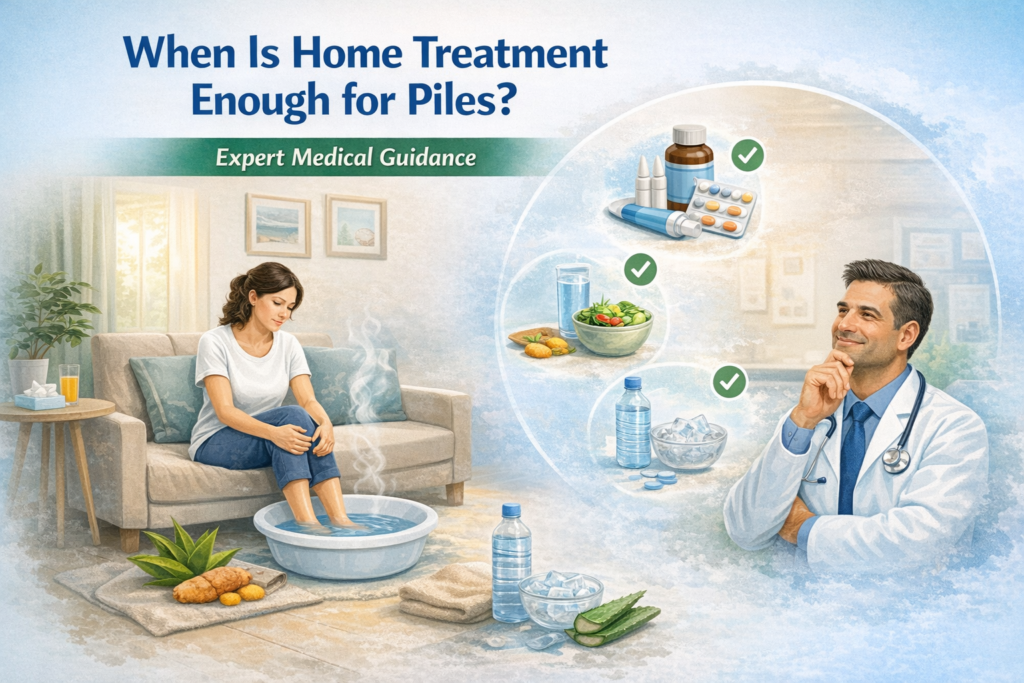
Piles (haemorrhoids) are one of the most common anorectal conditions seen in clinical practice. Despite being widespread, confusion around their treatment is equally common. Many patients struggle with a critical question:
“Is home treatment enough for my piles, or do I need medical or surgical treatment?”
Fear of surgery, embarrassment, misinformation from the internet, and delayed consultation often lead patients to either ignore symptoms or rely on ineffective remedies for too long. The truth, from a medical perspective, is balanced and reassuring: most piles cases—especially in early stages—respond very well to home-based treatment. However, there are clear signs and stages where professional intervention becomes necessary.
This expert-guided article explains when home treatment is sufficient for piles, when it is not, and how to make the right treatment decision at the right time.
Understanding Piles: A Medical Overview
Piles develop due to increased pressure on veins in the rectal and anal region. This pressure weakens vein walls, leading to swelling, inflammation, and symptoms such as pain or bleeding.
Common Causes
Chronic constipation
Straining during bowel movements
Prolonged sitting
Low-fiber diet
Pregnancy
Obesity
Sedentary lifestyle
Types of Piles and Their Treatment Implications
1. Internal Piles
Located inside the rectum
Often painless
Bleeding is the most common symptom
2. External Piles
Located around the anus
Can be painful, itchy, or swollen
3. Thrombosed Piles
Blood clot forms inside the pile
Sudden severe pain and swelling
Each type behaves differently, which is why treatment decisions must be individualized.
Grading of Internal Piles (Most Important Factor)
Medical decisions about piles treatment are largely based on grading:
Grade 1
Small swelling inside rectum
Bleeding may occur
No prolapse
Grade 2
Prolapse during straining
Goes back on its own
Grade 3
Prolapse during defecation
Needs manual repositioning
Grade 4
Permanently prolapsed
Cannot be pushed back
Home treatment is usually effective in Grade 1 and early Grade 2 piles.
When Home Treatment Is Enough for Piles
1. Mild Pain or Discomfort Only
If symptoms include:
Mild burning
Occasional itching
Discomfort during bowel movement
Home care is usually sufficient.
2. Occasional Bleeding (Bright Red, Small Quantity)
Bleeding only during defecation
Stops on its own
No weakness or anemia
This typically responds well to dietary changes and medications.
3. Early-Stage Internal Piles (Grade 1–2)
Patients with early piles often experience significant improvement with:
High-fiber diet
Stool softeners
Sitz baths
Oral venotonic medicines
4. Symptoms Triggered by Lifestyle Factors
If piles flare-ups occur due to:
Travel
Stress
Temporary constipation
Poor hydration
Correcting habits usually controls symptoms effectively.
What Home Treatment Should Include (Medically Recommended)
1. Dietary Correction (Cornerstone of Treatment)
Daily fiber intake of 25–30 grams
Fruits, vegetables, whole grains
Avoid processed foods
2. Adequate Hydration
2.5–3 liters of water daily
Prevents hard stools
3. Medicines Prescribed by a Doctor
Venotonic tablets to strengthen veins
Stool softeners
Short-term topical ointments
4. Sitz Bath Therapy
Warm water soak 2–3 times daily
Reduces pain and muscle spasm
5. Lifestyle Modifications
Avoid straining
Regular walking
Correct toilet posture
When followed consistently, these measures often control piles completely.
Signs That Home Treatment Is NOT Enough
Home treatment should not be continued blindly. Certain symptoms clearly indicate the need for medical evaluation.
1. Persistent or Heavy Bleeding
Bleeding lasting more than 7–10 days
Blood dripping or splashing
Symptoms of anemia (fatigue, dizziness)
This requires immediate medical attention.
2. Severe or Increasing Pain
Pain not relieved by medications
Pain preventing sitting or walking
Sudden onset severe pain (possible thrombosis)
3. Prolapse That Does Not Reduce
Piles remain outside the anus
Require manual repositioning repeatedly
Associated with mucus discharge
This usually indicates Grade 3 or 4 piles.
4. Recurrent Symptoms Despite Proper Home Care
If symptoms keep returning despite:
Adequate fiber
Regular medicines
Good bowel habits
Advanced treatment should be considered.
5. Signs of Infection or Complications
Fever
Pus discharge
Severe swelling
Foul smell
These are not typical of simple piles and need urgent care.
When Advanced Treatment Becomes Necessary
Medical (Non-Surgical) Procedures
For selected cases, doctors may recommend:
Rubber band ligation
Injection therapy
Infrared coagulation
These are outpatient procedures and not major surgery.
Minimally Invasive Surgical Options
For advanced piles, modern treatments include:
Laser piles treatment
Doppler-guided haemorrhoidal artery ligation
These procedures are:
Minimally painful
Day-care based
Associated with faster recovery
Why Delaying Proper Treatment Can Be Harmful
Many patients continue home remedies even when surgery is clearly indicated. This can lead to:
Chronic blood loss
Severe anemia
Infection
Irreversible prolapse
Reduced quality of life
Early intervention always leads to better outcomes.
How Doctors Decide the Right Treatment
Doctors consider:
Severity of symptoms
Grade of piles
Patient age and health
Response to previous treatments
Impact on daily life
Treatment is always tailored—not one-size-fits-all.
Common Myths About Home Treatment for Piles
“If pain reduces, piles are cured”
Pain relief does not always mean disease reversal.
“Bleeding is normal in piles”
Occasional bleeding may be common, but persistent bleeding is not normal.
“Surgery is always risky”
Modern piles procedures are safe, precise, and recovery is quick.
Can Piles Be Managed Long-Term Without Surgery?
Yes—if diagnosed early and managed correctly. Long-term control depends on:
Permanent dietary changes
Regular bowel habits
Physical activity
Avoiding strain
Patients who commit to lifestyle correction often remain symptom-free for years.
Frequently Asked Questions
How long should I try home treatment before seeing a doctor?
If symptoms do not improve within 7–14 days, medical consultation is advised.
Is piles treatment different for elderly patients?
Yes. Treatment is more cautious and individualized due to associated health conditions.
Can piles come back after home treatment?
Yes, if lifestyle mistakes continue. Prevention is as important as treatment.
Final Expert Advice
Home treatment is highly effective for early-stage piles and should always be the first line of management. However, knowing when home care is enough and when to seek medical help is crucial. Ignoring warning signs can turn a manageable condition into a complicated one.
The best outcomes occur when patients combine early self-care with timely professional guidance.