
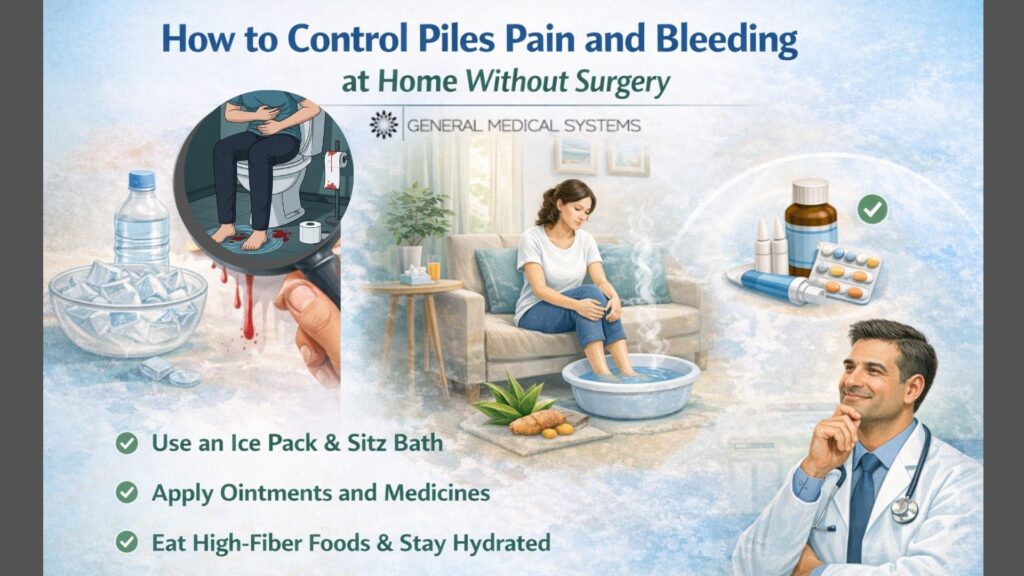
Piles, medically known as haemorrhoids, are swollen and inflamed veins in the rectum or anus. They are extremely common and affect people of all ages, especially those with sedentary lifestyles, chronic constipation, pregnancy-related strain, or poor dietary habits.
One of the biggest fears among patients is the assumption that piles always require surgery. In reality, most piles—especially early-stage piles—can be effectively controlled at home with the right combination of medicines, natural remedies, and lifestyle changes. Pain, itching, burning, and even mild bleeding can often be reduced significantly without surgical intervention.
This detailed guide explains how to control piles pain and bleeding at home, based on medical experience and evidence-based self-care practices.
Understanding Piles: Why Pain and Bleeding Occur
To manage piles effectively, it is important to understand what causes the symptoms.
Common Reasons for Piles Pain
-
Inflammation of haemorrhoidal veins
-
Muscle spasm in the anal canal
-
Hard stools causing pressure during bowel movements
-
Poor blood circulation in the rectal area
Why Bleeding Happens
-
Fragile swollen veins rupture during straining
-
Dry or hard stools scrape the piles mass
-
Increased pressure due to constipation or prolonged sitting
Important: Bright red blood during defecation is common in piles, but persistent or heavy bleeding should always be evaluated by a doctor.
Types of Piles and Home Care Suitability
Internal Piles
-
Located inside the rectum
-
Usually painless but may bleed
-
Home treatment is very effective in early stages (Grade 1 & 2)
External Piles
-
Located around the anus
-
Often painful, itchy, and swollen
-
Home care helps reduce symptoms and prevent worsening
Thrombosed Piles
-
Contain blood clots
-
Very painful
-
Need medical supervision, though early symptom relief is possible at home
Immediate Relief Measures for Piles Pain at Home
1. Warm Sitz Bath (Highly Effective)
Soaking the anal area in warm water for 15–20 minutes, 2–3 times a day, helps by:
-
Relaxing anal muscles
-
Improving blood flow
-
Reducing pain and swelling
Tip: Avoid adding harsh soaps or chemicals.
2. Cold Compress for Swelling
Applying an ice pack wrapped in cloth for 5–10 minutes can:
-
Reduce inflammation
-
Numb pain
-
Control swelling
Alternate between warm and cold therapy for better relief.
Medicines That Help Control Piles Pain and Bleeding
1. Topical Ointments and Creams
Over-the-counter piles creams containing:
-
Local anesthetics (for pain relief)
-
Anti-inflammatory agents
-
Mild steroids (short-term use)
These help reduce itching, burning, and discomfort.
2. Oral Medicines for Piles
Doctors often prescribe:
-
Venotonic tablets (strengthen vein walls)
-
Stool softeners (reduce strain)
-
Pain relievers (paracetamol preferred)
Avoid excessive use of painkillers without medical advice.
3. Fiber Supplements
Psyllium husk (Isabgol) or other fiber supplements:
-
Improve stool consistency
-
Prevent constipation
-
Reduce bleeding episodes
Natural Home Remedies for Piles Pain Relief
1. High-Fiber Diet (Most Important Step)
A fiber-rich diet is the foundation of piles care at home.
Include:
-
Whole grains
-
Oats
-
Green leafy vegetables
-
Fruits like papaya, apple, pear, figs
-
Lentils and legumes
Fiber softens stools and minimizes pressure on piles veins.
2. Adequate Water Intake
Drink 2.5–3 liters of water daily to:
-
Prevent hard stools
-
Improve digestion
-
Support faster healing
Dehydration is a major cause of piles flare-ups.
3. Aloe Vera Application (External Use Only)
Aloe vera gel helps:
-
Soothe burning sensation
-
Reduce inflammation
-
Promote healing
Ensure pure, chemical-free gel.
4. Coconut Oil for Anal Care
Acts as a natural moisturizer and mild anti-inflammatory agent.
Apply gently around the anal area to reduce dryness and irritation.
5. Swach Tummy
Swach Tummy is known to:
-
Improve bowel movements
-
Reduce constipation
-
Support gut health
Should be used cautiously and preferably after consulting a healthcare provider.
Lifestyle Changes That Prevent Piles Worsening
1. Correct Toilet Habits
-
Do not strain during bowel movements
-
Avoid sitting on the toilet for long periods
-
Respond to natural urge immediately
2. Proper Sitting Posture
-
Avoid prolonged sitting, especially on hard surfaces
-
Use a soft cushion if required
3. Regular Physical Activity
Simple activities such as:
-
Walking
-
Yoga
-
Light stretching
Improve bowel function and blood circulation.
4. Avoid Trigger Foods
Limit or avoid:
-
Spicy food
-
Fried food
-
Alcohol
-
Excessive caffeine
These can worsen irritation and bleeding.
Yoga and Exercises Helpful for Piles
Certain yoga poses support digestion and relieve pressure:
-
Pawanmuktasana (Wind-relieving pose)
-
Malasana (Squat pose)
-
Vajrasana (after meals)
Practice gently and consistently for long-term benefit.
How to Control Piles Bleeding at Home
Bleeding can be alarming but is often manageable in early stages.
Key Steps:
-
Maintain soft stools at all costs
-
Increase fiber and fluids
-
Avoid straining
-
Use prescribed venotonic medicines
-
Follow warm sitz baths regularly
Do not ignore bleeding that:
-
Occurs daily
-
Is heavy
-
Is associated with weakness or anemia
Common Mistakes to Avoid During Home Treatment
-
Overusing laxatives
-
Ignoring persistent pain or bleeding
-
Applying harsh home remedies
-
Self-medicating with steroids for long periods
-
Delaying medical consultation due to embarrassment
Early medical advice prevents complications.
When Home Treatment Is Not Enough
Home management works well for early and mild piles. However, consult a doctor if:
-
Bleeding continues beyond 7–10 days
-
Pain becomes severe
-
Piles prolapse outside the anus
-
There is pus, fever, or infection
Modern medical procedures today are minimally invasive and painless when needed.
Can Piles Be Controlled Permanently Without Surgery?
Yes, many patients successfully control piles long-term by:
-
Maintaining a fiber-rich diet
-
Staying physically active
-
Correcting toilet habits
-
Managing weight
-
Treating constipation early
Consistency is the key. Piles are a lifestyle-related condition, and long-term control depends on daily habits.
Frequently Asked Questions
Is piles pain always severe?
No. Early piles may cause mild discomfort and itching, which can be easily managed at home.
Can piles bleeding stop on its own?
Yes, mild bleeding often stops with dietary correction and stool softening. Persistent bleeding needs evaluation.
Is walking good for piles?
Absolutely. Walking improves digestion and prevents constipation, making it one of the best exercises for piles patients.
How long does home treatment take to work?
Most patients notice improvement within 7–14 days, provided treatment is followed correctly.
Final Thoughts
Piles may be uncomfortable, but they are not a life-threatening condition and not always surgical. With the right approach, piles pain and bleeding can be controlled effectively at home. Early attention, proper diet, simple remedies, and disciplined lifestyle habits can prevent disease progression and improve quality of life significantly.
If symptoms persist despite home care, timely medical consultation ensures safe, modern, and minimally invasive solutions.