
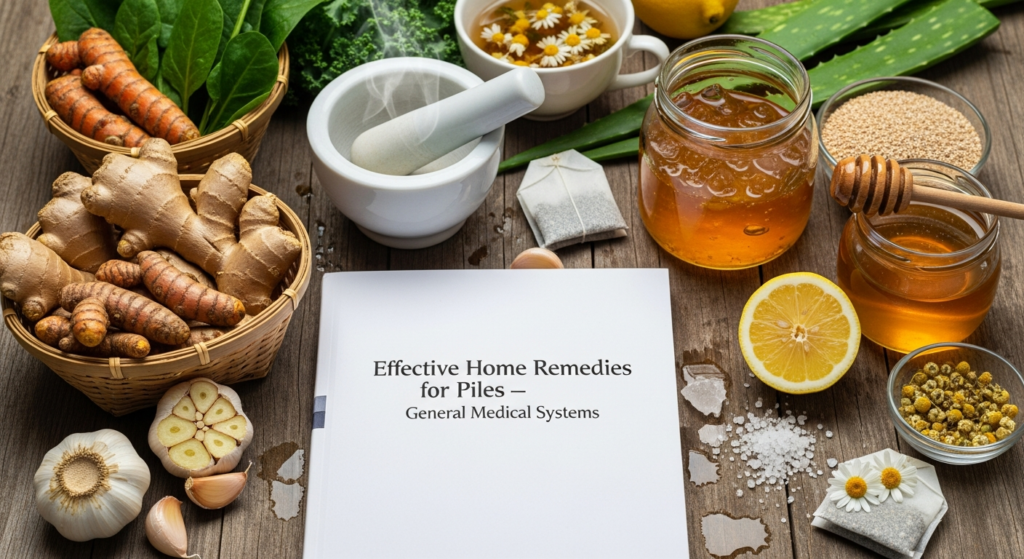
Piles (haemorrhoids) are one of the most common anorectal disorders seen across all age groups today. From modern medicine to Ayurveda and traditional healing systems, there is strong agreement on one fact: most piles cases begin with digestive imbalance and lifestyle errors, not with a surgical problem.
When diagnosed early, piles can often be managed effectively at home using safe remedies recommended across general medical systems—without surgery or long-term medication dependence.
This article explains effective home remedies for piles, supported by modern medical understanding and traditional systems like Ayurveda, focusing on symptom relief, root-cause correction, and recurrence prevention.
Understanding Piles from a Medical Perspective
Piles are swollen veins in the rectum or anal region caused by increased pressure due to:
- Chronic constipation
- Hard stools and straining
- Prolonged sitting
- Poor digestion
- Low-fiber diet
- Sedentary lifestyle
Types of Piles
- Internal piles – painless but bleed
- External piles – painful, itchy, swollen
- Prolapsed piles – come out during motion
Across medical systems, treatment success depends on reducing pressure on rectal veins and improving bowel habits.
Why Home Remedies Work for Piles
General medical systems agree that:
- Medicines alone cannot cure piles permanently
- Soft stool is the most important healing factor
- Digestive correction prevents recurrence
Home remedies work because they:
- Improve stool consistency
- Reduce inflammation naturally
- Support vein healing
- Avoid side effects of long-term drugs
Effective Home Remedies for Piles (Doctor-Approved)
1. High-Fiber Diet (Foundation of Treatment)
Fiber increases stool bulk and softness, reducing strain.
Best sources:
- Green leafy vegetables
- Papaya, pear, apple
- Whole grains (oats, barley)
- Flaxseeds
👉 From both modern medicine and Ayurveda, fiber is the first-line treatment for piles.
2. Adequate Water Intake
Dehydration causes dry, hard stools.
Recommendation:
- 2.5–3 liters of water daily
- Start the day with warm water
This improves bowel movement naturally.
3. Isabgol (Psyllium Husk)
Isabgol is widely accepted in both modern and traditional medicine.
How to use:
- 1–2 teaspoons with warm water or milk at night
Benefits:
- Non-habit forming
- Safe for long-term use
- Reduces straining
4. Sitz Bath (Warm Water Therapy)
Sitz bath is universally recommended across medical systems.
Method:
- Sit in warm water for 10–15 minutes
- Twice daily or after bowel movement
Benefits:
- Reduces pain and burning
- Relaxes anal muscles
- Improves blood circulation
5. Aloe Vera for Natural Healing
Aloe vera has anti-inflammatory and soothing properties.
Use:
- Apply fresh aloe vera gel externally
- Aloe vera juice (if suitable) for digestion
Helps reduce irritation and supports tissue healing.
6. Coconut Oil for Dryness & Pain
Coconut oil acts as a natural lubricant.
How to apply:
- Apply gently around the anus before bedtime
Reduces friction, burning, and pain during bowel movement.
7. Triphala for Digestive Correction (Ayurvedic System)
Triphala is a well-known herbal formulation.
Dosage:
- ½–1 teaspoon with warm water at bedtime
Medical benefit:
- Improves bowel regularity
- Detoxifies colon
- Prevents recurrence
8. Buttermilk for Gut Balance
Buttermilk improves digestion and reduces acidity.
How to consume:
- 1 glass after lunch
- Add roasted cumin or coriander powder
Supports healthy gut bacteria.
9. Correct Toilet Habits
Improper toilet habits worsen piles.
Doctor-recommended rules:
- Never strain
- Do not sit on the toilet for long
- Go only when natural urge is present
This reduces pressure on rectal veins.
10. Physical Activity & Walking
Lack of movement slows digestion.
Recommended:
- Walk 20–30 minutes daily
- Gentle yoga like Malasana, Pawanmuktasana
Improves bowel movement and blood flow.
Foods to Avoid During Piles
Across all medical systems, the following worsen piles:
- Spicy and fried food
- Alcohol and smoking
- Processed and junk food
- Excess tea and coffee
These increase inflammation, acidity, and constipation.
Role of Medicines in Home-Based Piles Treatment
Modern Medicine View
Doctors may prescribe:
- Stool softeners
- Anti-inflammatory ointments
- Pain-relief creams
These are helpful short-term but not a permanent solution.
Ayurvedic & Herbal Support
Ayurvedic medicines focus on root causes.
Common herbs:
- Haritaki – bowel regulation
- Nagkesar – bleeding control
- Neem – inflammation reduction
- Bael fruit – digestive strength
When taken with guidance, they help avoid surgery in early stages.
For trusted Ayurvedic solutions, visit:
👉 www.pilestreatmentathome.com
When Home Remedies Are Enough
Home treatment is usually sufficient when:
- Bleeding is mild
- Pain is manageable
- Piles are early stage
- Constipation improves
Consistency is more important than speed.
When to Consult a Doctor
Immediate consultation is needed if:
- Bleeding is continuous or heavy
- Severe pain or swelling
- Piles come out and don’t go back
- No improvement after 7–10 days
Delaying treatment can lead to complications.
Final Medical Conclusion
Across general medical systems, the message is clear:
piles are a digestive and lifestyle disorder first, and a rectal condition second.
Effective home remedies work when they:
- Soften stool
- Improve digestion
- Reduce inflammation
- Correct daily habits
With early care and disciplined routine, most patients achieve long-term piles relief without surgery