
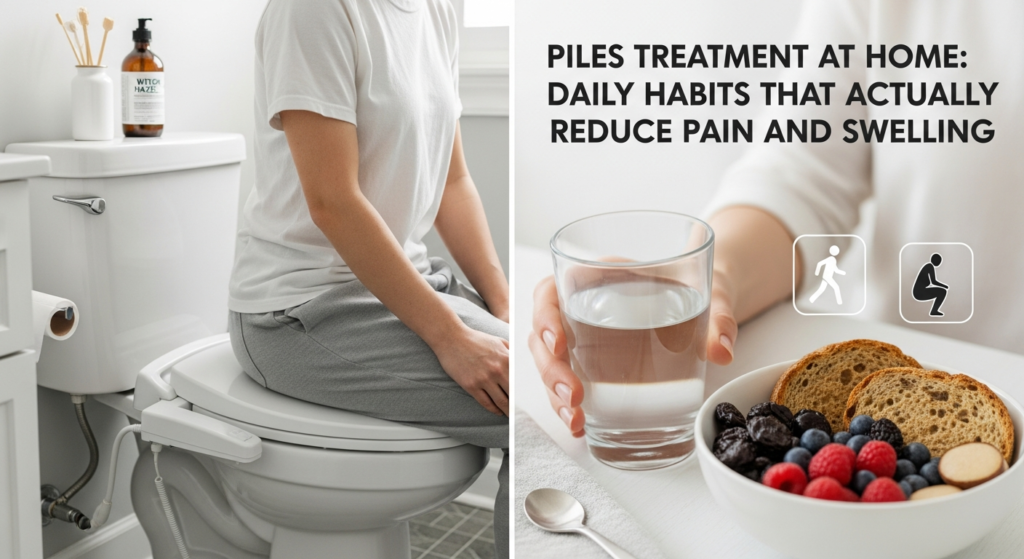
Piles (hemorrhoids) do not develop overnight—and they rarely heal overnight either. In most cases, piles are the result of daily habits repeated over months or years. This is why effective piles treatment at home is less about one miracle remedy and more about correcting everyday routines that strain the rectal veins.
In this expert guide, we focus on daily habits that genuinely help reduce piles pain, swelling, itching, and recurrence—especially in early and moderate stages.
Why Daily Habits Matter More Than Occasional Remedies
Many patients rely on random home remedies while continuing habits that worsen piles, such as prolonged sitting, poor toilet posture, or low water intake. This leads to temporary relief but frequent relapse.
True improvement happens when:
Bowel movements become soft and regular
Pressure on rectal veins is reduced
Inflammation is controlled daily
This is the foundation of sustainable piles treatment at home.
Morning Routine: Start Your Day the Right Way
1. Drink Warm Water After Waking Up
Drinking 1–2 glasses of warm water in the morning:
Stimulates bowel movement
Prevents hard stools
Reduces straining
This simple habit is one of the most effective natural steps for piles prevention.
2. Never Delay the Urge to Pass Stool
Ignoring the urge leads to harder stools and increased pressure on hemorrhoidal veins. Train your body to follow a fixed morning toilet routine.
Toilet Habits That Worsen Piles (and What to Do Instead)
Bad Habits to Avoid
Sitting on the toilet for more than 5–7 minutes
Using mobile phones while passing stool
Straining or forcing bowel movements
These habits significantly worsen piles symptoms.
Correct Toilet Posture
Using a small footstool to elevate your feet slightly:
Aligns the rectum naturally
Reduces pressure
Allows easier stool passage
This posture alone can improve piles symptoms within days.
Daily Diet Habits for Piles Relief
Diet is the backbone of all piles remedies questions and answers.
Foods to Eat Daily
Whole grains (oats, brown rice)
Green vegetables (spinach, bottle gourd)
Fruits with fiber (papaya, apple, pear)
Curd and buttermilk
Water Intake
Drink at least 8–10 glasses of water daily. Fiber without water can worsen constipation.
Foods to Limit
Spicy food
Fried snacks
Excess tea/coffee
Bakery and refined flour items
These foods harden stools and irritate the anal lining.
Movement and Sitting Habits
Is Prolonged Sitting Harmful for Piles?
Yes. Sitting for long hours slows blood flow and increases pressure in rectal veins.
Healthy Daily Movement Tips
Walk for 20–30 minutes daily
Stand up every 45–60 minutes if working at a desk
Avoid heavy weight lifting during active piles
Walking remains one of the safest and most recommended exercises for piles patients.
Evening Care: Reducing Swelling and Discomfort
Warm Sitz Bath
A daily sitz bath in warm water for 10–15 minutes:
Relaxes anal muscles
Reduces inflammation
Relieves itching and pain
This is a gold-standard practice in piles treatment at home.
External Care
Keep the area clean and dry
Avoid harsh soaps
Gently pat dry after washing
Excess moisture or aggressive cleaning can worsen irritation.
Sleep and Stress: The Hidden Factors
Chronic stress affects digestion and bowel regularity, indirectly worsening piles.
Helpful habits include:
Sleeping 7–8 hours daily
Avoiding late-night heavy meals
Practicing light stretching or breathing exercises
Good digestion starts with a calm nervous system.
How Long Do Daily Habits Take to Show Results?
With consistent daily care:
Pain and itching improve in 3–5 days
Swelling reduces in 1–2 weeks
Bowel movements normalize within 7–10 days
However, advanced piles may still require medical treatment despite good habits.
When Home-Based Daily Care Is Not Enough
Seek medical advice if you experience:
Continuous bleeding
Severe pain
Prolapse (piles coming out)
No improvement after 2 weeks
Modern treatments today are quick, safe, and often day-care procedures.
Expert Conclusion
Effective piles treatment at home is not about shortcuts—it’s about discipline. Daily habits related to diet, toilet posture, movement, and hydration determine whether piles heal, worsen, or return.
If practiced consistently, these lifestyle changes can:
Reduce pain naturally
Prevent recurrence
Delay or avoid surgery in early stages
Home care works best when combined with awareness and timely medical guidance.